

Yijin Industry Co. , Ltd is an enterprise specializing in the production, sales and import and export of metal materials. The company's products include steel, Stainless steel,aluminum alloy, copper alloy, nickel-based alloy and other metal materials, which are widely used in aerospace, automobile, construction, electronics, machinery and other fields.
Our company has advanced production equipment and a professional technical team to ensure the high quality and stability of products. At the same time, the company also pays attention to environmental protection and sustainable development, adopts environmental protection technology in the production process, and strictly abides by national and international environmental protection regulations.
Why Choose Us
Rich Experience
Adhering to the business philosophy of "quality first, reputation first", Yijin is committed to providing high-quality metal materials and high-quality services to global customers.
Professional Team
The company has a complete after-sales service system and a professional technical support team, which can respond to customer problems and needs in a timely manner, provide customers with beneficial technical guidance and solutions, and enhance customer loyalty and satisfaction.
High Quality
The company continuously strives to promote the construction of products and brands, actively carries out publicity activities, and establishes a good corporate image and brand image. At the same time, the company also pays attention to improving product quality. Through continuous improvement of technology and process, the competitiveness of products and market share have been improved.
Quality Control
We have established long-term and stable cooperative relations with many well-known domestic and foreign steel mills, aluminum factories and other metal material manufacturers, and has a stable supply capacity of a large number of high-quality raw materials, reducing procurement costs. It can also provide customers with better product quality assurance.
-

Standard: ASTM、AISI、JIS、DIN、EN、GB. Delivery time: 7-15 days or according to the order quantity or
Add to Inquiry -
Products Description JIS-SUH309 The JIS SUH 309 material is a significant and versatile alloy with
Add to Inquiry -
Products Description JIS-SUH310 The chemical composition of SUH 310 stainless steels is carefully
Add to Inquiry -
Products Description Chemical composition In addition to strength, this material also offers good
Add to Inquiry -
Products Description Chemical Component In addition to strength, SUS630 also offers excellent
Add to Inquiry -
Products Description Chemical composition mechanical properties Another advantage of SUS631
Add to Inquiry -
Products Description JIS-SUS316J1L The strength and durability of JIS-SUS316J1L are also
Add to Inquiry -
Products Description Mechanical Composition Chemical Properties The strength and durability of
Add to Inquiry -
Products Description SUS316L Composition SUS316 also exhibits remarkable heat resistance. It can
Add to Inquiry -
Products Description SUS316 Chemical composition SUS316 Mechanical properties SUS316 stainless
Add to Inquiry -
Products Description SUS317 chemical composition SUS317 Mechanical Properties Stainless Steel 317L
Add to Inquiry -
Products Description SUS317L Chemical Composition Carbon C: ≤0.03 Silicon Si: ≤1.00 Manganese
Add to Inquiry
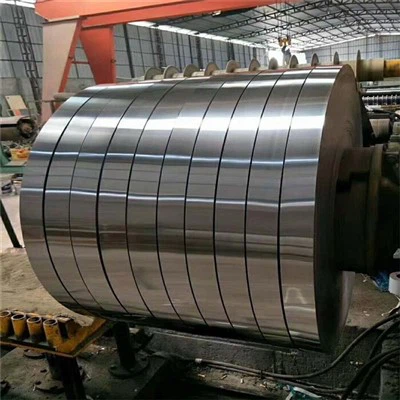


Stainless steel is a generic term for a group of corrosion resistant steels containing a minimum of 10.5% of chromium. Varying additions of nickel, molybdenum, titanium, niobium and other elements may also be present.
All stainless steels have a high resistance to corrosion. This remarkable resistance to attack is due to the naturally occurring chromium-rich oxide film present on the surface of the steel. Although extremely thin, this invisible, inert film and therefore passive film is tightly adherent to the metal and extremely protective in a wide range of corrosive media. The film is rapidly self-repairing in the presence of oxygen, and damage by abrasion, cutting or machining is quickly repaired.
Benefits of Stainless Steel
Corrosion Resistance
All stainless steels exhibit high resistance to corrosion, making them suitable for a wide range of environments. Low alloyed grades resist corrosion in atmospheric conditions; highly alloyed grades can resist corrosion in most acids, alkaline solutions, and chloride-bearing environments, even at elevated temperatures and pressures.
100% Recyclable And Sustainable
Stainless steel boasts 100% recyclability, with approximately 90% recycling efficiency and recycling rates. It has low embodied energy over the life of its products and can be reused and re-purposed without losing its quality, making it one of the world's most environmentally-friendly materials.
High And Low-temperature Resistance
Some grades will resist scaling and maintain high strength at very high temperatures, while others demonstrate exceptional toughness at cryogenic conditions.
Ease Of Fabrication
Stainless steel is highly versatile and can be easily cut, welded, formed, machined, and fabricated, allowing for efficient manufacturing processes.
Aesthetic Appeal
Stainless steel is available in many surface finishes. It is easily and simply maintained resulting in a high quality, pleasing appearance.
Strength
The cold work hardening properties of many stainless steels can enable design optimisation by reducing material thickness, weight, and associated costs. Other stainless steels may be heat treated to produce very high-strength components.
The Three Primary Types of Stainless Steel
Austenitic stainless steel
There are two main characteristics of this type of stainless steel. First, there is a lot of chromium included during the production of austenitic stainless steel. Items produced with this material are more corrosion-resistant. Second, these items tend to be non-magnetic, although they can become magnetic with a cold forming process. These are the most common types of stainless steel alloys.
Ferritic Stainless Steel
This type of stainless steel is the second most common type of alloy and is also magnetic. Items produced with this alloy can be hardened through cold forming and also tend to be less expensive than other types due to the lower nickel content.
Martensitic Stainless Steel
This material is the least common type of stainless steel alloy. Martensitic stainless steel is used in applications where high tensile strength is needed or a lot of impact resistance. In many cases, this material is also combined with a protective polymer coating to improve corrosion-resistance.
Carbon Steel Vs. Stainless Stee The Differences
Corrosion resistance
The most noticeable distinction between carbon steel and stainless steel is their capacity to withstand corrosion. Stainless steels are typically more resistant to corrosion than carbon steels, as their name suggests. Iron is present in both carbon and stainless steel, where it oxidizes in the presence of oxygen to form rust. Compared to carbon steel, stainless steel is more corrosion-resistant due to the addition of chromium.
Mechanical properties
Because there are so many different types and grades of each, it is challenging to generalize how carbon steels and stainless steels differ in terms of their mechanical properties. Due to their typically higher nickel content, stainless steel can be more malleable than carbon steel.
Due to the alloying elements that many stainless steel grades include, which increase its strength, carbon steel with shallow carbon content may not be able to meet the tensile strengths of some stainless steel. However, carbon steel can be heat treated more quickly than austenitic stainless steel if it contains enough carbon (usually at least 0.30 per cent by weight).


Appearance
The metal's appearance must be considered if the task demands aesthetic appeal. When aesthetic appearance is critical, stainless steel with specific treatments is typically used. Both materials can be sanded and polished to have a brilliant, shining appearance, but carbon steel needs paint or a clear finish straight away after the polishing procedure. The carbon steel will start to discolour and finally rust if it is not coated. Additionally, stainless steel will maintain its brilliance where it has been scratched, unlike painted carbon steel, which needs to be repainted or corroded.
Cost
Stainless steels are often more expensive than carbon steels, though prices vary depending on the grade. This is mainly because stainless steel has several alloying metals, such as chromium, nickel, manganese, and others. All of these extra components result in a higher price compared to carbon steel. Contrarily, most of the ingredients of carbon steel are relatively inexpensive iron and carbon. Carbon steel can be ideal if you're on a tight budget for your next project.
Stainless Steel Applications
Automotive And Transportation
It is also heavily featured in other fields of transportation like freighting to make shipping containers, road tankers and refuse vehicles. It’s resistance to corrosion makes it ideal to transport chemicals, liquids and food products. The low maintenance of stainless steel also makes it an easy and cost-effective metal to clean and sustain.
Medical Technology
Stainless steel is preferred in clean and sterile environments as it is simple to clean and does not easily corrode. Stainless is used in the production of a wide range of medical equipment, including surgical and dental instruments.
Building Trade
Due to its strength, resistance, and flexibility, stainless steel application has become a vital element of the building trade. It is commonly featured in the interior on countertops, backsplashes, and handrails, and is also used externally in cladding for high impact buildings.
Food And The Catering Industry
In the food and catering industry, stainless steel is used to manufacture kitchen accessories, cookware, and cutlery. Utensils such as knives are made using less ductile grades of stainless steel. The more ductile grades are used to make grills, cookers, saucepans, and sinks.
Stainless steel can also be used to finish freezers, dishwashers, refrigerators, and countertops. In food production, stainless steel is ideal because it doesn’t affect the flavour of the food. It is also corrosion resistant, and hence able to hold acidic drinks including orange juice. The ease of cleaning stainless steel makes it difficult to harbour bacteria, adding to its usefulness in food storage.
How to Make Stainless Steel
Melting the Raw Materials.
The different stainless steel materials are placed in a furnace (typically an electric furnace for modern stainless steel manufacturing applications) and heated to their melting point. This process can take anywhere between 8 and 12 hours, according to metalsupermarkets.com and other sources. Once the metal is molten, stainless steel manufacturing can proceed to the next step.
Removal of Excess Carbon.
The molten material placed into a vacuum oxygen decarburization (VOD) or argon oxygen decarburization (AOD) system to remove excess carbon. Depending on how much carbon is removed, this process could result in a standard or a low-carbon variant of the alloy—for example, 304 versus 304L stainless steel. This can affect the tensile strength and hardness of the final product.
Tuning or Stirring.
To help fine-tune the quality of the final product, the molten steel may be stirred to help distribute and/or remove specific stainless steel components from the mixture. This helps to ensure that the stainless steel is of uniform quality and will meet the specifications required by end users (like Marlin Steel).
Forming the Metal.
As the stainless steel begins to cool, it is put through a variety of forming processes—starting with hot rolling while the steel is still above its crystallization temperature. Hot rolling helps get the steel into a rough shape, and is often used to create billets or blooms of metal. To create metal blooms or billets of precise dimensions, the stainless steel may be cold rolled.
Heat Treatment/Annealing.
To relieve internal stresses and alter the stainless steel’s mechanical properties, it may be annealed (heated and cooled under controlled conditions). If annealed, the steel may need to be descaled so the protective oxide layer isn’t compromised.
Cutting and Shaping.
After the annealing process, stainless steel is put through a variety of cutting and shaping processes to create an ideal final product for the application. The specific operations used to cut the stainless steel will vary depending on the size and shape of the billet/bloom and the desired final product. For example, the steel may be cut mechanically with large metal shears if making thick metal plates. Meanwhile, CNC punch or laser cutting machines may be used to cut shapes out of thinner metal sheets.
Never Use An Abrasive On Stainless Steel
This includes but is not limited to sandpaper, steel wool, metal brushes, and harsh abrasive cleaners. Soft abrasives might work in specific scenarios. However, spot testing in an inconspicuous place is recommended before performing widespread maintenance. You should also take care to use abrasives in the same direction as the grain or polish on the surface of the steel to ensure an optimal appearance.
Always Use Appropriate Safety Gear
Goggles, gloves, and other protective gear will help to improve worker safety and provide an unobstructed view and unhindered cleaning of stainless surfaces.
Always use cleaners in a ventilated environment
Should cleaning require more than soap and water, be sure to use cleaners in a ventilated environment. Inhaling fumes might carry health risks.
Always add water to acid, not acid to water
Many of the acids used in cleaning stainless steel are highly caustic. Adding acid to water slowly will help reduce splashing and avoid potential injury.
Check follow-up procedures for cleaning
As mentioned above, most cleaning methods require a warm water rinse, a separate washing with warm soap and water or both.
Our Factory
The company's import and export business volume has increased year by year and has become one of the company's important businesses. Adhering to the tenet of "quality first, customer first", the company continuously improves service levels and product quality to meet market demand and customer expectations, and contribute to the development of the metal material industry.


FAQ
As one of the leading stainless steel suppliers in China, we warmly welcome you to wholesale bulk high-grade stainless steel in stock here from our factory. All metal materials are with high quality and competitive price.
1 4571, SUS440C, 409 Stainless Steel