


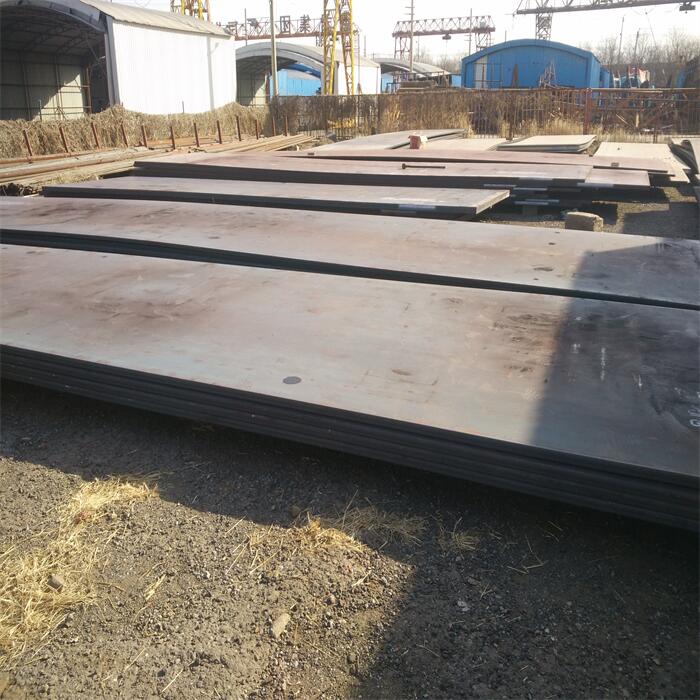

AB/EQ56 Steel Plate
Products Description Impact on Steelmaking Quality Chemical Composition Accuracy Accurate Endpoint Judgment Situation: If the endpoint of steelmaking is judged accurately, the contents of key elements such as carbon, phosphorus, and sulfur in molten steel can be precisely controlled. For...
Description
Products Description
Impact on Steelmaking Quality
Chemical Composition Accuracy
Accurate Endpoint Judgment Situation: If the endpoint of steelmaking is judged accurately, the contents of key elements such as carbon, phosphorus, and sulfur in molten steel can be precisely controlled. For example, when producing high-quality alloy steel, the control requirement for carbon content is extremely strict. When the endpoint is judged accurately, the carbon content in the molten steel can precisely reach the target range, such as 0.1% - 0.2%, and at the same time, the contents of impurity elements like phosphorus and sulfur can also be controlled at a very low level, meeting the quality standards. This enables the steel to possess good properties such as strength, toughness, and corrosion resistance, ensuring the stability of steel quality.
Inaccurate Endpoint Judgment Situation: If the endpoint judgment is inaccurate, the composition of the molten steel will deviate. If the carbon content is too high, the steel may be too hard and brittle, and cracks are likely to occur during subsequent processing (such as forging and rolling). If the carbon content is too low, it will lead to insufficient strength of the steel. As for phosphorus and sulfur elements, excessive contents will seriously affect the hot working performance and corrosion resistance of the steel. For example, when the sulfur content is too high, the steel will exhibit hot shortness during the hot working process.
Temperature Control Precision
Accurate Endpoint Judgment Situation: Precise endpoint judgment helps to better control the temperature of the molten pool. Under the appropriate endpoint temperature, the fluidity and solidification characteristics of the molten steel are good, which is beneficial to subsequent processes such as casting. For example, for some special steel grades like stainless steel, the casting temperature range is relatively narrow. Accurate endpoint temperature control (such as 1500 - 1550 °C) can ensure that the molten steel can smoothly fill the mold during the casting process, avoiding quality problems such as surface defects and internal porosity.
Inaccurate Endpoint Judgment Situation: If the endpoint temperature is judged incorrectly, a too high temperature may lead to excessive oxidation of the molten steel, increasing oxide inclusions in the steel and reducing the purity of the steel. A too low temperature will make the fluidity of the molten steel worse, and insufficient pouring may occur during casting, resulting in incomplete product shapes. Meanwhile, it will also affect the crystal structure of the steel, making the performance of the steel uneven.
Slag Performance Optimization
Accurate Endpoint Judgment Situation: Accurate endpoint judgment can ensure that the slag performance is in the best state. Appropriate slag basicity and iron oxide content can effectively carry out dephosphorization and desulfurization reactions. For example, at the endpoint, when the slag basicity reaches an appropriate value (such as 3 - 4), the phosphorus in the molten steel can be fully removed, making the phosphorus content of the steel meet the standards of high-quality steel and improving the steel quality.
Inaccurate Endpoint Judgment Situation: If the endpoint judgment is wrong, the slag performance may not meet the requirements. For example, if the slag basicity is insufficient, the dephosphorization reaction will be incomplete, and the phosphorus content in the steel will exceed the standard, affecting the corrosion resistance and mechanical properties of the steel. If the iron oxide content in the slag is inappropriate, it may lead to poor fluidity of the slag, affecting the reaction between the molten steel and the slag, and then affecting the steel quality.
|
AB/EQ56 Extra high strength property in tempering and quenching |
||||||
|
Grade |
Mechanical Property |
Charpy V Impact Test |
||||
|
Yield |
Tensile |
Elongation |
Degree |
Energy 1 |
Energy 2 |
|
|
Min Mpa |
Mpa |
Min % |
-40 |
J |
J |
|
|
AB/EQ56 |
550 |
670-835 |
16 |
37 |
55 |
|
|
Note: Energy 1 is transverse impact test, Energy 2 is longitudinal |
||||||


Why Choose Us?
We take pride in our ability to provide custom solutions for our customers' unique needs.
We analyze and compare the previous products and the current technical situation of our AB/EQ56 Steel Plate, and develop new technical specifications and processes.
Our customers trust us to deliver high-quality Cold-rolled Steel products on time and on budget.
We strictly implement the warm and thoughtful after-sales service, adhere to the development of good professional ethics.
We offer a wide range of Cold-rolled Steel products to meet diverse customer needs.
We adhere to the customer-centric and brand-oriented business philosophy, and continue to provide customers with reliable and excellent products and services.
Our factory is committed to upholding the highest standards of safety and quality.
All staff of our company and all departments work together to combine business management, professional technology, quantitative statistical methods and ideological education.
Our Cold-rolled Steel products are known for their durability and reliability.
Relying on the superior conditions and strong advantages of mass production, we are able to meet the different needs of our customers.
Hot Tags: ab/eq56 steel plate, China ab/eq56 steel plate suppliers, factory, S31008, SUS420J1, 316Ti, N10276, C61900, 7050aluminum


