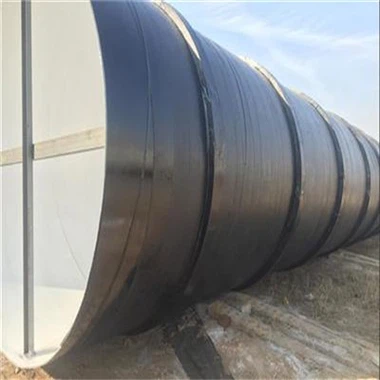
Ah36 Marine Steel Plate Ship Building Steel Sheet For Ship Construction
Products Description Factors Affecting the Mechanical Properties of Ah36 High-Strength Ship Plate Steel Ah36 high-strength ship plate steel is widely used in the shipbuilding industry due to its excellent mechanical properties. However, several factors can influence these properties, which are...
Description
Products Description
Factors Affecting the Mechanical Properties of Ah36 High-Strength Ship Plate Steel
Ah36 high-strength ship plate steel is widely used in the shipbuilding industry due to its excellent mechanical properties. However, several factors can influence these properties, which are crucial for ensuring the safety and performance of ships. In this article, we will explore the various factors that affect the mechanical properties of Ah36 high-strength ship plate steel.
Heat Treatment
Heat treatment processes can significantly affect the mechanical properties of Ah36 steel. Annealing, normalizing, quenching, and tempering are common heat treatment methods.
Annealing softens the steel and relieves internal stresses. It improves ductility and toughness while reducing hardness.
Normalizing refines the grain structure and enhances the strength and hardness of the steel. It also improves its toughness and machinability.
Quenching rapidly cools the steel, resulting in a hardened structure. This process increases the strength and hardness but may reduce ductility. Tempering is then performed to reduce brittleness and improve toughness.
The selection of appropriate heat treatment parameters is crucial to achieve the desired mechanical properties. Factors such as heating temperature, cooling rate, and tempering temperature need to be carefully controlled.
Microstructure
The microstructure of Ah36 steel also has a significant influence on its mechanical properties. Different microstructures, such as ferrite, pearlite, bainite, and martensite, have distinct mechanical characteristics.
Ferrite is soft and ductile but has relatively low strength. Pearlite consists of alternating layers of ferrite and cementite and has moderate strength and toughness. Bainite and martensite are harder and stronger but may be more brittle.
The microstructure of Ah36 steel can be controlled by adjusting the chemical composition and heat treatment processes. For example, adding alloying elements and using appropriate heat treatment can promote the formation of desired microstructures.
Mechanical properties (at room temperature in annealed condition)
|
Product Form |
||
|
C, H, P |
L |
|
|
Thickness a or diameter d (mm) |
a ≤ 12 |
d ≤ 25 |
|
Proof Strength |
Rp0.2 N/mm2 |
230 |
|
Rp1.0 N/mm2 |
270 |
|
|
Tensile Strength |
Rm N/mm2 |
550 - 750 |
|
HB. Max 1)2)3) |
223 |


Manufacturing Process
The manufacturing process of Ah36 steel can also affect its mechanical properties. Processes such as rolling, forging, and casting can introduce different microstructural features and residual stresses.
Rolling can refine the grain structure and improve the mechanical properties. Forging can enhance the strength and toughness by aligning the grain structure. Casting may result in inhomogeneous microstructures and defects, which can negatively affect the mechanical properties.
Proper control of the manufacturing process parameters is essential to ensure consistent and reliable mechanical properties.
Environmental Factors
Environmental factors such as temperature, corrosion, and fatigue can also impact the mechanical properties of Ah36 steel.
At low temperatures, the steel may become brittle, reducing its ductility and toughness. High temperatures can cause softening and loss of strength.
Corrosion can lead to degradation of the steel surface and reduction in thickness, affecting its mechanical integrity. Fatigue loading can cause cracks to develop over time, reducing the strength and durability of the steel.
To mitigate the effects of environmental factors, appropriate protective measures such as coatings and corrosion inhibitors can be used. Regular inspection and maintenance are also necessary to ensure the continued performance of the steel.
Why Choose Us?
We take pride in our ability to provide custom solutions for our customers' unique needs.
We analyze and compare the previous products and the current technical situation of our Ah36 Marine Steel Plate Ship Building Steel Sheet For Ship Construction, and develop new technical specifications and processes.
Our customers trust us to deliver high-quality Cold-rolled Steel products on time and on budget.
We strictly implement the warm and thoughtful after-sales service, adhere to the development of good professional ethics.
We offer a wide range of Cold-rolled Steel products to meet diverse customer needs.
We adhere to the customer-centric and brand-oriented business philosophy, and continue to provide customers with reliable and excellent products and services.
Our factory is committed to upholding the highest standards of safety and quality.
All staff of our company and all departments work together to combine business management, professional technology, quantitative statistical methods and ideological education.
Our Cold-rolled Steel products are known for their durability and reliability.
Relying on the superior conditions and strong advantages of mass production, we are able to meet the different needs of our customers.
Hot Tags: ah36 marine steel plate ship building steel sheet for ship construction, China ah36 marine steel plate ship building steel sheet for ship construction suppliers, factory, S410000, HCT600C, 440A, C5441, SUS301, GH3044