


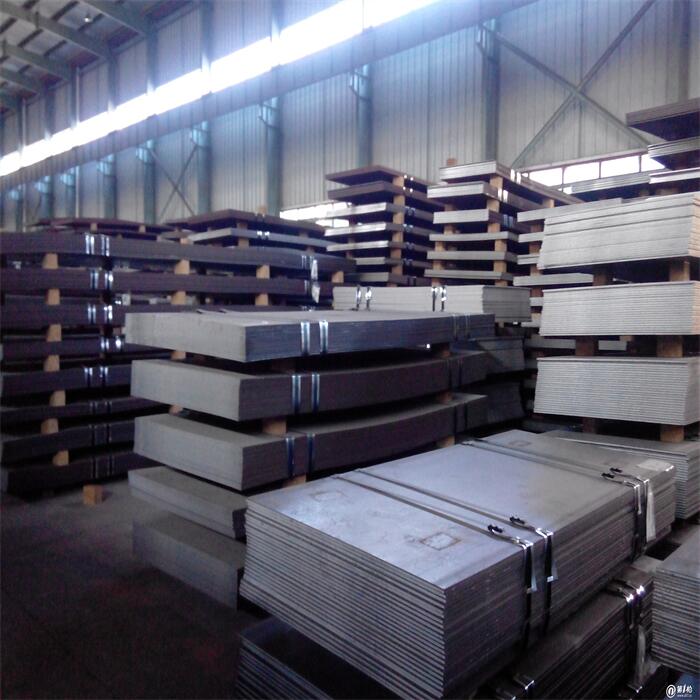
GL-A32 Steel Plate
Products Description The following are some methods to adjust the welding current to avoid the situation of overly narrow weld width: I. Determine the Initial Current Range Based on the Characteristics of the Welded Parts Welded Part Thickness : The thicker the welded part, the greater the...
Description
Products Description
The following are some methods to adjust the welding current to avoid the situation of overly narrow weld width:
I. Determine the Initial Current Range Based on the Characteristics of the Welded Parts
Welded Part Thickness: The thicker the welded part, the greater the welding current required. This is because thicker welded parts need more heat to melt sufficient metal to form a weld of an appropriate width. For example, for low-carbon steel welded parts with a thickness of 3 - 5mm, the initial welding current can be set between 80 - 120A during manual arc welding; when the thickness of the welded part reaches 10 - 12mm, the current may need to be increased to around 160 - 200A.
Welded Part Material: Welded parts made of different materials have different physical properties such as thermal conductivity and melting point, and thus have different requirements for the welding current. For example, aluminum and aluminum alloys have a relatively high thermal conductivity, and a larger current is required during welding compared to welding low-carbon steel to ensure sufficient heat input. Generally speaking, when welding aluminum and aluminum alloys of the same thickness, the current needs to be 20% - 30% higher than that for low-carbon steel.
II. Trial Welding and Observation Adjustment
Trial Welding Operation: Before the formal welding, conduct trial welding on a test plate made of the same material as the welded part. During the trial welding, start from the lower limit of the estimated appropriate current range and observe the formation of the weld. For example, set an initial current and weld a short length (about 5 - 10cm) to check whether the weld width meets the requirements.
Observation of Weld Appearance: Focus on observing whether the weld width is too narrow. If the weld width is narrower than the expected minimum appropriate width, it indicates that the current may be too low. The appropriate weld width is generally determined according to the specific requirements and design of the welded part. For example, for butt welds of some structural parts, the width may be required to be around 8 - 12mm. At the same time, also observe whether there are other defects in the weld, such as lack of fusion and slag inclusion, because these defects may also be related to the welding current.
Grade:Shipbuilding steel plate,Grade,GL/A32,GL/D32,GL/E32,GL/F32steel plate/sheets/Material/Spec/A131
1.Specification:GL marine steel plate, GL marine vessel, A131 Spec GL steel plate, Steel Plate GL Grade A32,steel GL Grade D32, GL Grade E32 spec,GL Grade F32 steel plate
2.Tensile Requirements:Tensile Strength min 440-590Mpa, Yield Point min 315Mpa(32,46 Ksi), Elongation min 22%.
3.Delivery Condition: AR(As hot rolled only), TMCP, Q+T(Quenching+Tempering), N(Normalizing),CR( Control rolled only)
4.Chemical composition:quality certficiate sample as GL rules.
5.Mechanical property :quality certficiate sample as GL rules.


III. Combine Welding Experience and Specifications
Reference to Welding Procedure Qualification: Welding procedure qualification is an important basis for determining welding process parameters. If possible, refer to the existing welding procedure qualification reports. These reports contain the optimal welding current ranges for specific factors such as the material, thickness, and type of the welded part. Welding according to the parameters in the qualification reports can effectively avoid problems such as overly narrow weld width.
Learn from Welding Experience: Experienced welders have accumulated a large amount of experience regarding the adjustment of welding current in their long-term practice. For example, they know approximately how much current is needed to obtain good weld formation under a certain combination of welded parts and welding environment. Novice welders can consult experienced welders or refer to relevant welding manuals and technical materials to obtain such empirical knowledge.
Why Choose Us?
We take pride in our ability to provide custom solutions for our customers' unique needs.
We analyze and compare the previous products and the current technical situation of our GL-A32 Steel Plate, and develop new technical specifications and processes.
Our customers trust us to deliver high-quality Cold-rolled Steel products on time and on budget.
We strictly implement the warm and thoughtful after-sales service, adhere to the development of good professional ethics.
We offer a wide range of Cold-rolled Steel products to meet diverse customer needs.
We adhere to the customer-centric and brand-oriented business philosophy, and continue to provide customers with reliable and excellent products and services.
Our factory is committed to upholding the highest standards of safety and quality.
All staff of our company and all departments work together to combine business management, professional technology, quantitative statistical methods and ideological education.
Our Cold-rolled Steel products are known for their durability and reliability.
Relying on the superior conditions and strong advantages of mass production, we are able to meet the different needs of our customers.
Hot Tags: gl-a32 steel plate, China gl-a32 steel plate suppliers, factory, SUS630, C2 G35 G652, Copper, N06600, CuSn2, 50CrMo4


