


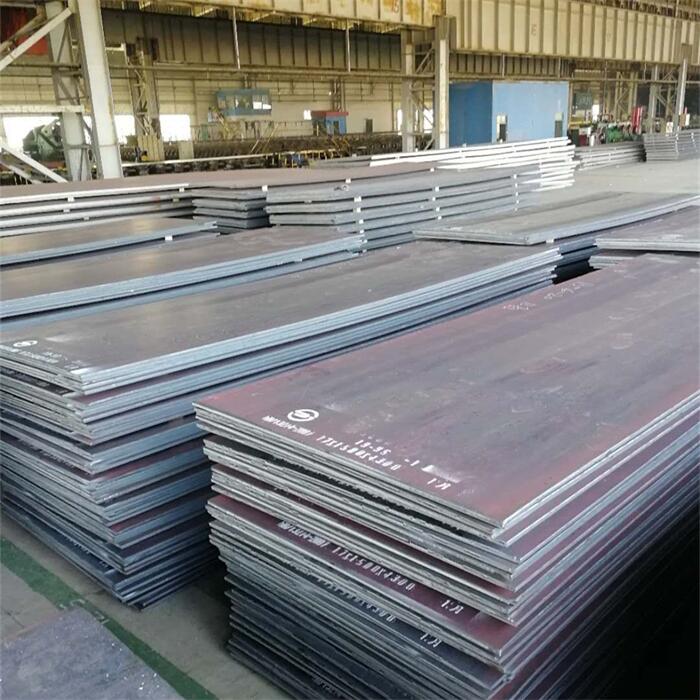
LR/EH40 Ship Building Steel Plate
Products Description The construction history of oil tankers has had a profound impact on the modern oil tanker industry, mainly reflected in the following aspects: I. Technological progress Hull design: The hull design of early oil tankers was relatively simple. Over time, continuous...
Description
Products Description
The construction history of oil tankers has had a profound impact on the modern oil tanker industry, mainly reflected in the following aspects:
I. Technological progress
Hull design: The hull design of early oil tankers was relatively simple. Over time, continuous improvement and innovation have been made. Modern oil tankers adopt more advanced hull structure designs, such as double-hull structures, which improve the safety and reliability of oil tankers. The double-hull structure can provide additional protection in the event of a collision or leakage accident and reduce the risk of oil leakage.
Power system: The power system of oil tankers has also undergone continuous development. From traditional steam engines to diesel engines and then to modern high-efficiency and energy-saving engines, the performance of the power system has been continuously improved. The power system of modern oil tankers has higher power output, lower fuel consumption and fewer emissions, meeting environmental protection and economic requirements.
Navigation and communication technology: With the progress of science and technology, the navigation and communication technology of oil tankers has also been greatly improved. Modern oil tankers are equipped with advanced satellite navigation systems, radars, Automatic Identification System (AIS) and other equipment, improving the safety and accuracy of navigation. At the same time, high-speed data communication systems enable oil tankers to maintain real-time contact with onshore control centers and realize remote monitoring and management.
II. Formulation of safety regulations
Lessons from accidents: Major oil tanker accidents that have occurred in history, such as the "Torrey Canyon" and the "Exxon Valdez", have attracted high attention from the international community to the safety of oil tankers. These accidents have prompted governments and international organizations to formulate stricter safety regulations and standards to prevent the recurrence of similar accidents.
Improvement of safety regulations: After years of development, oil tanker safety regulations have been continuously improved. Modern oil tankers must comply with strict construction standards, operation specifications and safety inspection systems. For example, oil tankers must be equipped with complete fire fighting, life-saving and anti-pollution equipment, and crew members must undergo professional training and certification.
International cooperation: Oil tanker accidents often have global impacts, so international cooperation plays an important role in oil tanker safety management. International organizations such as the International Maritime Organization (IMO) have formulated a series of international conventions and regulations. Governments of various countries strengthen the safety supervision of oil tankers through cooperation and coordination.
Specification we supply:
|
Thickness |
2-200mm |
|
Width |
1000-4000mm |
|
Length |
5000-15000mm |


III. Improvement of environmental awareness
Hazards of oil spills: Oil tanker spills in history have caused serious damage to the marine environment and aroused people's high attention to environmental protection issues. Oil spills can pollute the ocean, damage the ecosystem, and endanger marine life, causing huge economic losses to industries such as fisheries and tourism.
Strengthening of environmental protection regulations: In order to reduce the impact of oil spills on the environment, governments and international organizations have strengthened environmental supervision of oil tankers. Modern oil tankers must comply with strict anti-pollution regulations, such as installing oil-water separators and equipping oil containment booms to prevent oil spills. At the same time, the international community is also actively promoting the development of green shipping and encouraging oil tankers to adopt more environmentally friendly technologies and fuels.
Requirements for sustainable development: With the global emphasis on sustainable development, the oil tanker industry is also facing higher environmental protection requirements. Future oil tankers will pay more attention to energy conservation and emission reduction and reducing greenhouse gas emissions to meet the requirements of environmental protection and sustainable development.
Why Choose Us?
We take pride in our ability to provide custom solutions for our customers' unique needs.
We analyze and compare the previous products and the current technical situation of our LR/EH40 Ship Building Steel Plate, and develop new technical specifications and processes.
Our customers trust us to deliver high-quality Cold-rolled Steel products on time and on budget.
We strictly implement the warm and thoughtful after-sales service, adhere to the development of good professional ethics.
We offer a wide range of Cold-rolled Steel products to meet diverse customer needs.
We adhere to the customer-centric and brand-oriented business philosophy, and continue to provide customers with reliable and excellent products and services.
Our factory is committed to upholding the highest standards of safety and quality.
All staff of our company and all departments work together to combine business management, professional technology, quantitative statistical methods and ideological education.
Our Cold-rolled Steel products are known for their durability and reliability.
Relying on the superior conditions and strong advantages of mass production, we are able to meet the different needs of our customers.
Hot Tags: lr/eh40 ship building steel plate, China lr/eh40 ship building steel plate suppliers, factory, C5210, S235J2C N, CuZn38Pb1 5, S31603, C68700, S410000


