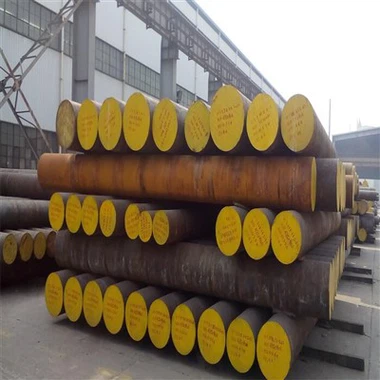
LR Grade A Shipbuilding Steel Plate
Products Description The thickness of LR Grade A Shipbuilding Steel Plate can have several notable effects on its weldability, as detailed below: Heat Dissipation and Heat Input Requirements Thinner Plates : Thinner LR Grade A steel plates, typically those with a thickness of a few millimeters...
Description
Products Description
The thickness of LR Grade A Shipbuilding Steel Plate can have several notable effects on its weldability, as detailed below:
Heat Dissipation and Heat Input Requirements
Thinner Plates:
Thinner LR Grade A steel plates, typically those with a thickness of a few millimeters up to around 10 - 15 mm, have relatively faster heat dissipation. As a result, during welding, a lower heat input is usually sufficient to achieve proper fusion between the base metal and the filler metal. Welders can use smaller welding electrodes or wire diameters, lower welding currents, and relatively faster welding speeds. For example, in gas metal arc welding (GMAW) of a 6 mm thick LR Grade A plate, a welding current in the range of 100 - 150 amps might be suitable, along with a welding speed that allows for smooth bead formation without excessive heat build-up.
The quick heat dissipation also helps in minimizing the size of the heat-affected zone (HAZ). Since less heat is absorbed by the base metal, there is less alteration of the microstructure in the surrounding area of the weld, reducing the risk of changes in mechanical properties and potential cracking in the HAZ.
Thicker Plates:
As the thickness of the LR Grade A steel plate increases, say beyond 15 - 20 mm, heat dissipation becomes slower. This requires a higher heat input during welding to ensure that the weld penetrates through the entire thickness of the plate and achieves proper fusion at the root of the weld. Welders may need to use larger electrodes or filler wires, increase the welding current, and potentially slow down the welding speed. For instance, when welding a 30 mm thick LR Grade A plate using shielded metal arc welding (SMAW), a welding current in the range of 180 - 250 amps might be necessary, along with a more carefully controlled welding speed to avoid defects like incomplete penetration or lack of fusion.
However, the larger heat input for thicker plates leads to a wider heat-affected zone. The extended HAZ means that a larger portion of the base metal is subjected to thermal cycling, which can cause grain growth and changes in the microstructure. This may result in a reduction in the toughness and strength of the HAZ and increase the susceptibility to cracking, especially if proper welding procedures are not followed.
Welding Defect Susceptibility
Porosity:
Thinner LR Grade A plates are less likely to develop porosity during welding. With proper cleaning and the use of suitable welding consumables, the relatively quick solidification due to faster heat dissipation helps in trapping fewer gas bubbles within the weld metal. For example, in manual welding of thin plates, if the correct welding technique and dry electrodes are used, porosity issues are minimal.
In contrast, thicker plates have a higher risk of porosity. The slower cooling rate allows more time for gases to be entrapped in the molten weld pool. Moreover, if the welding speed is too slow or the welding parameters are not optimized, the molten pool remains in a liquid state for a longer period, increasing the likelihood of gas inclusions. To mitigate this, techniques like proper preheating, the use of low-hydrogen electrodes (in SMAW), and good control of the welding environment (to reduce moisture and other gas sources) are essential.
LR Grade A Ship Steel Mechanical Properties:
Grade |
Thickness |
Yield Strength |
Tensile Strength |
Elongation |
Impact Energy |
|
(mm) |
MPa (min) |
MPa |
% (min) |
(KV J) (min) |
|
|
20 degree |
|||||
|
LR Grade A |
4-260 |
235 |
400-520 |
22 |


Welding Procedure Complexity
Thinner Plates:
Welding thinner LR Grade A steel plates is relatively straightforward. The welding parameters are easier to control, and common welding processes like GMAW or SMAW can be efficiently carried out with standard procedures. There is less need for complex preheating or post-welding heat treatment in most cases. For example, in the construction of small ship components made from thin LR Grade A plates, welders can quickly complete the welding work with minimal setup and monitoring requirements.
Thicker Plates:
Welding thicker plates demands a more complex welding procedure. Precise control of heat input, strict adherence to preheating and interpass temperature requirements, and often the use of specialized welding techniques or equipment become necessary. Additionally, post-welding inspections need to be more thorough due to the higher risk of defects. For instance, when building the hull structure of a large ship using thick LR Grade A plates, a detailed welding procedure specification (WPS) needs to be developed and followed meticulously, and various non-destructive testing methods may be employed to ensure the integrity of the welded joints.
In summary, the thickness of LR Grade A Shipbuilding Steel Plate significantly impacts its weldability, with thicker plates presenting more challenges and requiring more careful control of welding parameters and procedures to achieve sound and defect-free welds compared to thinner ones.
Why Choose Us?
We take pride in our ability to provide custom solutions for our customers' unique needs.
We analyze and compare the previous products and the current technical situation of our LR Grade A Shipbuilding Steel Plate, and develop new technical specifications and processes.
Our customers trust us to deliver high-quality Cold-rolled Steel products on time and on budget.
We strictly implement the warm and thoughtful after-sales service, adhere to the development of good professional ethics.
We offer a wide range of Cold-rolled Steel products to meet diverse customer needs.
We adhere to the customer-centric and brand-oriented business philosophy, and continue to provide customers with reliable and excellent products and services.
Our factory is committed to upholding the highest standards of safety and quality.
All staff of our company and all departments work together to combine business management, professional technology, quantitative statistical methods and ideological education.
Our Cold-rolled Steel products are known for their durability and reliability.
Relying on the superior conditions and strong advantages of mass production, we are able to meet the different needs of our customers.
Hot Tags: lr grade a shipbuilding steel plate, China lr grade a shipbuilding steel plate suppliers, factory, 7071aluminum, CuAl15, C68800, 1 4521, 1 4021, SUS310S