


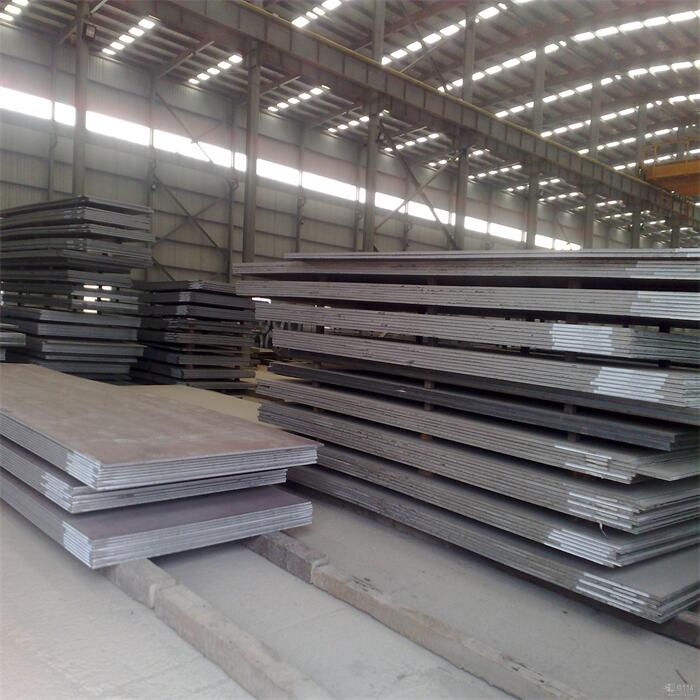


NK Marine Steel Plate
Products Description How to Enhance the Corrosion Resistance of NK Marine Steel Plate In the demanding environment of marine applications, the corrosion resistance of NK Marine Steel Plate is of critical significance. Corrosion can lead to structural deterioration, reduced performance, and...
Description
Products Description
How to Enhance the Corrosion Resistance of NK Marine Steel Plate
In the demanding environment of marine applications, the corrosion resistance of NK Marine Steel Plate is of critical significance. Corrosion can lead to structural deterioration, reduced performance, and potential safety hazards. Therefore, finding effective ways to enhance the corrosion resistance of this steel plate is of paramount importance.
One of the most effective methods to improve the corrosion resistance of NK Marine Steel Plate is through the application of protective coatings. These coatings act as a barrier between the steel surface and the corrosive marine environment. High-quality anti-corrosion coatings, such as epoxy-based or zinc-rich coatings, can be applied. Before coating, the steel plate surface must be thoroughly cleaned and prepared to ensure optimal adhesion. This may involve processes like degreasing, sandblasting, or pickling to remove any contaminants, rust, or oxide layers. The coating should be applied uniformly and in the recommended thickness to provide effective protection. Regular inspection and maintenance of the coating are essential to identify any damage or deterioration and to carry out timely repairs or recoating.
Another approach is alloying the steel with specific elements. Elements such as chromium, nickel, and molybdenum can significantly enhance the corrosion resistance of the NK Marine Steel Plate. These alloying elements form a protective oxide layer on the surface of the steel, which inhibits the penetration of corrosive agents. The precise composition and ratio of these alloying elements need to be carefully controlled to achieve the desired level of corrosion resistance without adversely affecting other mechanical properties of the steel.


In addition to alloying, proper heat treatment can also contribute to improving the corrosion resistance. Heat treatment processes like annealing or tempering can modify the microstructure of the steel, reducing the number of grain boundaries and defects that are prone to corrosion initiation. This results in a more homogeneous and stable structure that is better able to withstand the corrosive effects of the marine environment.
Furthermore, electrochemical protection methods can be employed. Cathodic protection, for instance, involves attaching a sacrificial anode to the steel structure. The anode corrodes preferentially, protecting the NK Marine Steel Plate from corrosion. This method is commonly used in submerged or partially submerged marine structures.
Maintaining a clean and dry environment around the steel plate is also crucial. Moisture and contaminants can accelerate corrosion. Regular cleaning to remove salt deposits, dirt, and other corrosive substances helps prevent the onset and progression of corrosion. Additionally, proper ventilation in storage and operating areas can reduce the humidity and prevent the accumulation of moisture.
In the design stage, consideration should be given to minimizing crevices and areas of stagnant water on the steel plate surface. Smooth and continuous surfaces are less likely to trap corrosive substances and moisture, reducing the risk of localized corrosion.
Finally, regular inspection and monitoring of the NK Marine Steel Plate are essential. Early detection of corrosion signs allows for prompt intervention and implementation of appropriate remedial measures. Non-destructive testing methods, such as ultrasonic testing and electrochemical impedance spectroscopy, can be used to assess the integrity of the steel plate and its corrosion protection systems.
In conclusion, enhancing the corrosion resistance of NK Marine Steel Plate requires a combination of strategies including the application of protective coatings, alloying, appropriate heat treatment, electrochemical protection, environmental control, and vigilant inspection and maintenance. By implementing these measures, the lifespan and performance of the steel plate in marine applications can be significantly improved, ensuring the safety and reliability of marine structures and vessels.
| Grade | Standard | Chemical Composition | Deoxygenation Method | ||||
| C | Mn | Si | S | P | |||
| ≤ | |||||||
| Q195 | - | 0.06~0.12 | 0.25~0.50 | 0.3 | 0.05 | 0.045 | F,b,Z |
| Q215 | A | 0.09~0.15 | 0.25~0.55 | 0.3 | 0.05 | 0.045 | F,b,Z |
| B | 0.045 | F,b,Z | |||||
| Q235 | A | 0.14~0.22 | 0.30~0.65 | 0.3 | 0.05 | 0.045 | F,b,Z |
| B | 0.12~0.20 | 0.30~0.70 | 0.045 | ||||
| C | ≤0.18 | 0.35~0.18 | 0.04 | 0.04 | Z | ||
| D | ≤0.17 | 0.035 | 0.035 | TZ | |||
| Q255 | A | 0.18~0.28 | 0.40~0.70 | 0.3 | 0.05 | 0.045 | F,b,Z |
| B | 0.045 | ||||||
| Q275 | - | 0.28~0.38 | 0.50~0.80 | 0.35 | 0.05 | 0.045 | b,Z |
| Common number | Mechanical properties | ||
| Rm Mpa | Y.S.(Mpa) | A5 | |
| ASTM A36 | 400-550 | ≥250 | ≥20 |
| Q235A | 335-410 | ≥235 | ≥26 |
| Q345B | 490-675 | ≥345 | ≥21 |
Hot Tags: nk marine steel plate, China nk marine steel plate suppliers, factory, CuZn38Pb1 5, HR0 Steel, 1 4016, 1080aluminum, C28000, C6280


