


Standard Steel Plate Sizes For Shipbuilding
Products Description The Hardness and Toughness Standards of Standard Steel Plate Sizes for Shipbuilding When it comes to standard steel plate sizes for shipbuilding, the hardness and toughness standards are of paramount importance. These standards play a crucial role in determining the...
Description
Products Description
The Hardness and Toughness Standards of Standard Steel Plate Sizes for Shipbuilding
When it comes to standard steel plate sizes for shipbuilding, the hardness and toughness standards are of paramount importance. These standards play a crucial role in determining the suitability and reliability of the steel plates in the construction and operation of ships.
The hardness of the steel plates is a key factor that influences their resistance to wear, abrasion, and indentation. It is typically measured using various hardness testing methods, such as the Rockwell, Brinell, or Vickers scales. The hardness standards for shipbuilding steel plates are carefully established to ensure that the plates can withstand the harsh conditions and mechanical stresses encountered at sea.
A sufficient level of hardness is necessary to prevent excessive deformation and damage when the plates come into contact with various elements, including cargo, mooring equipment, and the vessel's own moving parts. However, an overly high hardness can lead to brittleness and reduced toughness, which is equally undesirable.
Toughness, on the other hand, measures the steel plate's ability to absorb energy and resist fracture. It is a critical property that determines the plate's resilience in the face of sudden impact, shock loading, and dynamic forces that occur during a ship's voyage. Toughness is often evaluated through tests like Charpy impact testing or fracture toughness testing.
The toughness standards for shipbuilding steel plates are set to ensure that the plates can withstand the unpredictable and often severe forces that a ship may encounter, such as rough seas, accidental collisions, or extreme temperature variations. A balance must be struck between hardness and toughness to achieve an optimal combination that provides both durability and resistance to failure.


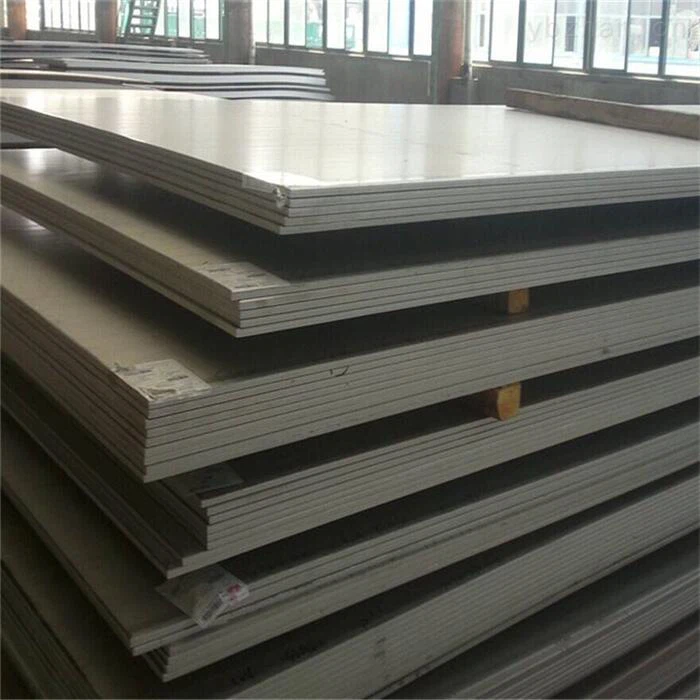

Standard Steel Plate Sizes For Shipbuilding
|
Material |
Q195,Q235,Q345,SS330,SS400,SS490,SM400,SPHC,SPHD,SPHE,SPHF, SAE series,S25C,S35C,S45C,SPHT1,SPHT2,A320L,A420L,A510L,QStE 340TM,QStE380TM,09CuPTiRE,09CuPCrNiA,Q450NQR1,A,B,D,AH32, AH36DH32,DH36,HQ460,HQ600MC,SPA-H,L245,L245NB,L245MB,L290, |
|
Standard |
ASTM A20/A20M,ASTM A36/A36M,JIS G3115,DIN 17100,EN 10028/Q/ASB/ATQ |
|
Length |
Customers' Requirement |
|
Width |
700~2000mm |
|
Thickness |
1.6~25.4mm |
|
Technique |
Hot Rolled |
|
Application |
Construction/Ship Plate,marine engineering structures/general usage/Construction machinery, bridge |
Hot Tags: standard steel plate sizes for shipbuilding, China standard steel plate sizes for shipbuilding suppliers, factory, Duplex Stainless Steel, CuSn4Zn3, SUS410, C11000, 316L, S40300


