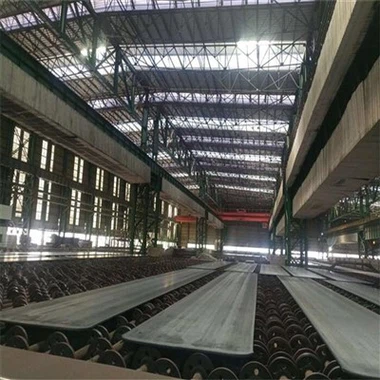
Steel Shipbuilding Plate Price List EH36
Products Description Impurity elements have a significant impact on the toughness of high-strength steel, mainly manifested as follows: I. Impact of sulfur (S) Sulfur usually exists in the form of sulfides in steel. The main impacts are: Reducing toughness: Sulfides are easy to form elongated...
Description
Products Description
Impurity elements have a significant impact on the toughness of high-strength steel, mainly manifested as follows:
I. Impact of sulfur (S)
Sulfur usually exists in the form of sulfides in steel. The main impacts are:
Reducing toughness: Sulfides are easy to form elongated inclusions in steel, such as MnS. These inclusions will become stress concentration points and are prone to initiate and expand cracks when under stress, thus significantly reducing the toughness of steel. For example, when high-strength steel is subjected to impact load, fractures may first occur at sulfide inclusions, leading to the deterioration of the toughness of steel.
Affecting welding performance: Sulfur also has an adverse impact on the welding performance of steel. During the welding process, sulfides may lead to a reduction in the toughness of the welding heat-affected zone and increase the risk of cracks in the welded joint.
II. Impact of phosphorus (P)
The main impacts of phosphorus in steel are as follows:
Increasing brittleness: Phosphorus is easy to segregate at grain boundaries and reduce the grain boundary bonding force, making the steel more brittle at low temperatures. This will lead to a significant drop in the toughness of high-strength steel, especially the low-temperature toughness. For example, in high-strength steel structures used in cold environments, if the phosphorus content is too high, the structure may be more prone to brittle fracture when impacted.
Affecting processing performance: High phosphorus content will also affect the processing performance of steel. Steel is more prone to cracks and other defects during rolling and forging processes, further reducing the toughness and quality of steel.
III. Impact of hydrogen (H)
The impact of hydrogen on the toughness of high-strength steel is mainly manifested as:
Causing hydrogen embrittlement: Hydrogen atoms can diffuse in steel and accumulate at defects such as dislocations and inclusions. When the hydrogen concentration reaches a certain level, it will lead to a sharp drop in the toughness of steel and the occurrence of hydrogen embrittlement. High-strength steel is more sensitive to hydrogen embrittlement. Even a small amount of hydrogen may cause serious loss of toughness. For example, in the welding process of high-strength steel, if the hydrogen content in the weld is too high, delayed cracks may appear after welding, seriously affecting the toughness and structural safety of steel.
Affecting fatigue performance: Hydrogen will also reduce the fatigue life of steel. Under alternating loads, the presence of hydrogen will accelerate the initiation and expansion of cracks and reduce the fatigue performance of high-strength steel.
| Steel grade | Yield point/MPa | Tensile point /MPa | Elongation/% | Temperature/° C | V-type impact test | ||
| Akv/J | |||||||
| ≤50MM | 50-70MM | 70-100MM | |||||
| Grade AH36 | ≥355 | 490-630 | ≥21 | 0 | 34/24 | 41/27 | 50/34 |
| Grade DH36 | ≥355 | 490-630 | ≥21 | -20 | 34/24 | 41/27 | 50/34 |
| Grade EH36 | ≥355 | 490-630 | ≥21 | -40 | 34/24 | 41/27 | 50/34 |
| Grade FH36 | ≥355 | 490-630 | ≥21 | -60 | 34/24 | 41/27 | 50/34 |


Here are some methods to reduce the sulfur content in high-strength steel:
I. Raw material control
Select low-sulfur raw materials:
During iron and steel production, select raw materials such as iron ore, coke, and scrap steel with low sulfur content. For example, high-grade iron ore can be given priority, as its sulfur content is relatively low. Some high-quality imported iron ore usually has a low sulfur content, which can effectively reduce the sulfur source in high-strength steel.
For the selection of scrap steel, strict detection and screening should be carried out to avoid using scrap steel with high sulfur content. A scrap steel quality detection system can be established, and chemical analysis and other methods can be used to determine the sulfur content in scrap steel to ensure that the used scrap steel meets the low-sulfur requirements.
Optimize raw material pretreatment:
Preprocess iron ore by processes such as magnetic separation and flotation, which can remove some sulfur-containing minerals and reduce the sulfur content in iron ore. For example, through the flotation process, sulfur-containing minerals can be separated from iron ore to improve the purity of iron ore.
Desulfurize coke. Some advanced coke desulfurization technologies such as high-temperature thermal desulfurization and chemical desulfurization can be adopted to reduce the sulfur content in coke and reduce the introduction of sulfur elements during steelmaking.
II. Steelmaking process control
Hot metal pretreatment:
Hot metal desulfurization treatment is an important link in reducing the sulfur content in high-strength steel. Desulfurization processes such as injection method and stirring method can be used. Desulfurizers (such as lime, magnesium powder, etc.) are added to the hot metal to react with sulfur to form sulfides and remove them. For example, using magnesium-based desulfurizers for hot metal injection desulfurization can reduce the sulfur content in hot metal to a very low level.
Control parameters such as temperature, time, and stirring intensity of hot metal pretreatment to improve desulfurization effect. Appropriately increasing the pretreatment temperature can promote the desulfurization reaction. Extending the treatment time and increasing the stirring intensity can make the desulfurizer fully contact with the hot metal and improve the desulfurization efficiency.
Optimization of steelmaking process:
When using oxygen converter steelmaking or electric furnace steelmaking, reasonably control steelmaking process parameters such as oxygen blowing intensity and slagging system to reduce the introduction and generation of sulfur. For example, in oxygen converter steelmaking, control the oxygen blowing time and intensity well to avoid excessive oxidation and reduce the chance of sulfur entering the molten steel from the charge.
Optimize the slagging process, select appropriate slagging agents such as lime and fluorite, and form slag with high alkalinity and good fluidity, which is conducive to absorbing sulfur in the molten steel. By adjusting the composition and properties of the slag, the desulfurization ability of the slag can be improved.
Secondary refining:
Adopting secondary refining technologies such as LF (ladle refining) and RH (vacuum circulation degassing) can further reduce the sulfur content in high-strength steel. During the LF refining process, sulfur in the steel can be effectively removed by adding desulfurizers and stirring the molten steel. RH refining is carried out under vacuum conditions, which can promote the transfer of sulfur in the molten steel to slag or gas phase, thereby reducing the sulfur content in the steel.
Control parameters such as temperature, time, and stirring intensity of secondary refining to improve the desulfurization effect. Appropriately increasing the refining temperature can enhance the activity of the desulfurizer. Extending the refining time can make the desulfurization reaction more sufficient. Increasing the stirring intensity can promote the mixing and reaction of the molten steel and the desulfurizer.
III. Subsequent treatment
Continuous casting process control:
During the continuous casting process, take protective casting measures to prevent the molten steel from contacting with air and avoid secondary oxidation of sulfur. Protective casting devices such as long nozzles and submerged nozzles can be used to reduce the increase in sulfur content in the molten steel.
Optimize continuous casting process parameters such as casting speed and cooling intensity to control the quality of the slab and reduce sulfur segregation and inclusion content in the slab, thereby improving the quality of high-strength steel.
Steel heat treatment:
Appropriate heat treatment such as normalizing and tempering can be carried out on high-strength steel to improve the steel structure and reduce the harmful effects of sulfur. During the heat treatment process, the diffusion and uniform distribution of sulfur in the steel can be promoted, the local enrichment of sulfur can be reduced, and the toughness and comprehensive performance of the steel can be improved.
Through the comprehensive application of the above methods, the sulfur content in high-strength steel can be effectively reduced and the quality and performance of the steel can be improved.
Why Choose Us?
We take pride in our ability to provide custom solutions for our customers' unique needs.
We analyze and compare the previous products and the current technical situation of our Steel Shipbuilding Plate Price List EH36, and develop new technical specifications and processes.
Our customers trust us to deliver high-quality Cold-rolled Steel products on time and on budget.
We strictly implement the warm and thoughtful after-sales service, adhere to the development of good professional ethics.
We offer a wide range of Cold-rolled Steel products to meet diverse customer needs.
We adhere to the customer-centric and brand-oriented business philosophy, and continue to provide customers with reliable and excellent products and services.
Our factory is committed to upholding the highest standards of safety and quality.
All staff of our company and all departments work together to combine business management, professional technology, quantitative statistical methods and ideological education.
Our Cold-rolled Steel products are known for their durability and reliability.
Relying on the superior conditions and strong advantages of mass production, we are able to meet the different needs of our customers.
Hot Tags: steel shipbuilding plate price list eh36, China steel shipbuilding plate price list eh36 suppliers, factory, C52100, Aluminum Sheet, HR0 Steel, C1220, Inconel625, CuZn20Al2