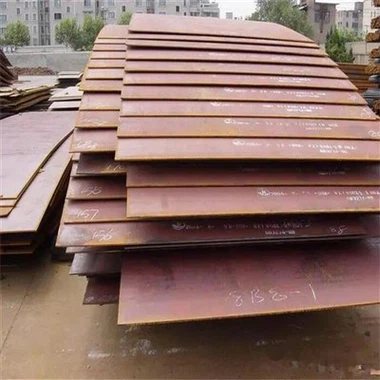
ABS Grade B Ship Steel Plate
Products Description Providing Specific Quality Requirements Examples of ABS Classification Society's Grade B Ship Steel Plate and Its Application Scope Data In the field of shipbuilding, the ABS (American Bureau of Shipping) Classification Society imposes precise and detailed quality...
Description
Products Description
Providing Specific Quality Requirements Examples of ABS Classification Society's Grade B Ship Steel Plate and Its Application Scope Data
In the field of shipbuilding, the ABS (American Bureau of Shipping) Classification Society imposes precise and detailed quality requirements on Grade B Ship Steel Plate to guarantee the safety and functionality of vessels. Here are some specific cases of these quality requirements along with the application scope data.
One significant aspect is the mechanical property requirements. For instance, the tensile strength of Grade B Ship Steel Plate as stipulated by ABS might be required to be within the range of 400 to 500 MPa. This ensures that the steel plate has sufficient strength to withstand the various forces and stresses it will encounter during the ship's operation. The yield strength, often set between 235 and 355 MPa, marks the point at which plastic deformation begins and is a crucial parameter for determining the load-bearing capacity of the plate.
The elongation at break, typically ranging from 20% to 25%, indicates the ductility of the steel plate. This property allows the plate to deform to a certain extent without fracturing, providing a safety margin under unexpected loading conditions.
Regarding the chemical composition, the carbon content might be limited to 0.22% at the maximum to balance hardness and ductility. Manganese could be specified to be within 1.0% to 1.6% to enhance strength and toughness. The phosphorus content is usually restricted to no more than 0.045%, and sulfur content is kept at 0.04% or lower to prevent brittleness and cracking.
In terms of the application scope, Grade B Ship Steel Plate is commonly used in the construction of various ship components. For example, it can be employed in the fabrication of hull structures, decks, bulkheads, and other internal structural elements. The plate thickness can vary depending on the specific location and function within the ship. In the hull, plates with thicknesses ranging from 10 to 30 mm might be used, while for decks, thicknesses of 8 to 20 mm could be typical.


Specification we supply:
|
Thickness |
1-200mm |
|
Width |
1000-4000mm |
|
Length |
5000-15000mm |
Service: Sand blasting and primer
|
Grade |
Chemical compostion % |
|||||
|
C |
Si |
Mn |
P |
S |
Als |
|
|
A |
≤0.21 |
≤0.50 |
≥2.5C |
≤0.035 |
≤0.035 |
-- |
|
B |
≤0.21 |
≤0.35 |
0.8-1.2 |
≤0.035 |
≤0.035 |
-- |
Hot Tags: abs grade b ship steel plate, China abs grade b ship steel plate suppliers, factory, S20200, S30100, Aluminum Block, S235J0, 405 Stainless Steel, CuSn2