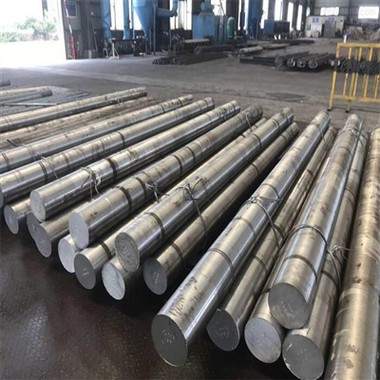
42CrMo4 Structural Steel Bar
Aug 03, 2011
Products Description
The following are some common topics about 42CrMo4:
1. Performance characteristics:
• High strength: It has high tensile strength and yield strength, suitable for structural components and mechanical parts that bear high loads.
• Good toughness: While having high strength, it also maintains certain toughness, making it less prone to fracture when subjected to impact or vibration.
• Excellent hardenability: It can obtain uniform hardness and strength on larger sections, which is very important for manufacturing large parts or components that require consistent overall performance.
• Fatigue resistance: It can withstand repeated stress cycles without easily developing fatigue cracks, improving the service life of the parts.
• Certain creep resistance: It has good creep resistance under high temperature and long-term loading conditions, suitable for some high-temperature working environments.
2. Chemical composition: Its chemical composition mainly includes carbon (C) content of approximately 0.38% - 0.45%, chromium (Cr) content of approximately 0.90% - 1.20%, molybdenum (Mo) content of approximately 0.15% - 0.30%, as well as small amounts of silicon (Si), manganese (Mn), sulfur (S), phosphorus (P), and other elements. The reasonable combination of these elements gives 42CrMo4 specific properties.
3. Application fields:
• Machinery manufacturing: Widely used in the manufacturing of various mechanical parts, such as machine tool components, transmission shafts, gears, bearings, etc.
• Automotive industry: It is used for automotive engine parts, transmission system parts, suspension system components, etc., such as crankshafts, connecting rods, half shafts, etc.
• Aerospace: In the aerospace field, it can be used to manufacture aircraft structural parts, landing gear components, engine parts, etc. Due to its high strength and good comprehensive performance, it can meet the strict requirements of materials in aerospace.
• Petrochemical industry: It is a common material for petrochemical equipment, such as manufacturing reactors, heat exchangers, pressure pipelines, etc., which can withstand the effects of high temperature, high pressure, and corrosive media.
• Mold manufacturing: Suitable for manufacturing plastic molds, die-casting molds, etc., which can ensure that the molds have sufficient strength and wear resistance to meet the requirements of the molding process.
4. Heat treatment processes:
• Quenching: Usually quenched at around 850°C, oil cooling or water cooling, to obtain high hardness and strength.
• Tempering: Tempered at around 560°C, water cooling or oil cooling, can reduce the internal stress after quenching, improve toughness and plasticity, and obtain good comprehensive mechanical properties.
• Normalizing: Normalizing can refine the grain and improve the microstructure to prepare for subsequent processing and heat treatment. The normalizing temperature is generally 860°C ± 10°C, and the material is air-cooled after discharging.
5. Machining performance:
• Machining performance: It has good machining performance, but in the processing process, it is necessary to select the appropriate cutting tools and cutting parameters to improve processing efficiency and quality.
• Welding performance: The welding performance is relatively good, but appropriate preheating and post-weld heat treatment are required before welding to reduce welding stress and the generation of cracks.