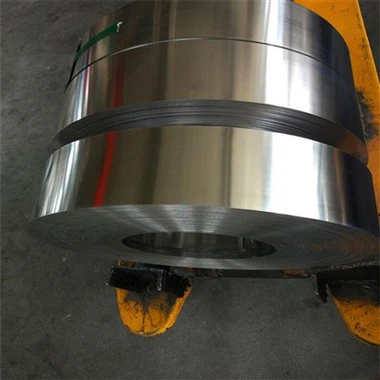
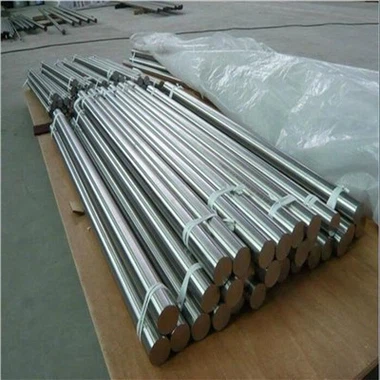
Hot Rolled Bridge Steel Plate 16q
Products Description Welding of hot-rolled bridge steel plate 16q requires careful selection of methods and process control to ensure weld joint strength, toughness, and resistance to cracking-critical for bridge structural safety. 16q is a low-alloy high-strength steel (LAHS) with good...
Description
Products Description
Welding of hot-rolled bridge steel plate 16q requires careful selection of methods and process control to ensure weld joint strength, toughness, and resistance to cracking-critical for bridge structural safety. 16q is a low-alloy high-strength steel (LAHS) with good weldability, but its welding must address issues like hydrogen-induced cracking (HIC), grain coarsening, and residual stress. Below are the common welding methods and key considerations for 16q bridge steel plates:
1. Shielded Metal Arc Welding (SMAW) – Manual Arc Welding
Principle: Uses a flux-coated electrode that melts to form a weld pool, with the flux generating gas and slag to shield the weld from atmospheric contamination (oxygen, nitrogen).
Advantages:
Simple equipment, high flexibility, suitable for on-site welding of complex joints (e.g., bridge girders, joints between components).
Adaptable to various positions (flat, horizontal, vertical, overhead).
Application Scenarios:
Field welding of bridge components (e.g., splicing of steel beams, connection of stiffeners).
Repair welding or small-batch welding tasks.
Welding Materials:
Low-hydrogen type electrodes (to prevent HIC) are mandatory, such as E5015-G or E5016-G (GB/T 5117 standard). These electrodes have a flux coating with low hydrogen content (≤8mL/100g) and good toughness.
Electrode drying: Pre-dry at 350–400°C for 1–2 hours, then store in a holding oven at 100–150°C to avoid moisture absorption.
Key Parameters:
Preheating temperature: For plates ≥25mm thick or in low-temperature environments (≤0°C), preheat to 80–150°C to reduce cooling rate and prevent cold cracking.
Interpass temperature: Maintain ≥150°C (but ≤300°C to avoid overheating).
Current: 140–220A (adjust based on electrode diameter, typically 3.2–5.0mm).
2. Submerged Arc Welding (SAW)
Principle: Welding is performed under a layer of granular flux, which melts to form a protective slag and gas, while a continuous bare wire acts as the filler metal.
Advantages:
High deposition rate (3–10x SMAW), suitable for long, straight 焊缝 (e.g., longitudinal seams of steel plates, flange-to-web joints).
Stable arc, low spatter, and high weld quality (uniform composition, low defects).
Application Scenarios:
Factory prefabrication of bridge components (e.g., welding of thick plates in steel girders, large-area 拼接).
Welding of medium-to-thick plates (≥10mm) with high efficiency requirements.
Welding Materials:
Wire: H08MnA or H10Mn2 (GB/T 14957 standard) for good strength matching.
Flux: Alkaline flux (e.g., SJ101G or SJ301) to ensure low hydrogen, high toughness, and resistance to porosity. Flux must be dried at 300–400°C for 2 hours before use.
Key Parameters:
Welding current: 500–800A; voltage: 30–40V; speed: 30–60cm/min (adjust based on plate thickness).
Preheating: For plates ≥30mm, preheat to 100–150°C.
Post-weld heat treatment (PWHT): Optional for thick plates (≥50mm) to eliminate residual stress, typically at 600–650°C for 1–2 hours.
3. Gas Metal Arc Welding (GMAW) – MIG/MAG Welding
Principle: Uses a continuous solid wire as both electrode and filler, with a shielding gas (CO₂ or CO₂-Ar mixture) to protect the weld pool.
Advantages:
High efficiency, good bead appearance, and suitable for semi-automatic or automatic welding.
Adaptable to thin-to-medium thickness plates (6–50mm) and various positions.


Why Choose Us?
We take pride in our ability to provide custom solutions for our customers' unique needs.
We analyze and compare the previous products and the current technical situation of our Hot Rolled Bridge Steel Plate 16q, and develop new technical specifications and processes.
Our customers trust us to deliver high-quality Cold-rolled Steel products on time and on budget.
We strictly implement the warm and thoughtful after-sales service, adhere to the development of good professional ethics.
We offer a wide range of Cold-rolled Steel products to meet diverse customer needs.
We adhere to the customer-centric and brand-oriented business philosophy, and continue to provide customers with reliable and excellent products and services.
Our factory is committed to upholding the highest standards of safety and quality.
All staff of our company and all departments work together to combine business management, professional technology, quantitative statistical methods and ideological education.
Our Cold-rolled Steel products are known for their durability and reliability.
Relying on the superior conditions and strong advantages of mass production, we are able to meet the different needs of our customers.
Hot Tags: hot rolled bridge steel plate 16q, China hot rolled bridge steel plate 16q suppliers, factory, 2 4856, GH3030, GH3044, GH4180, Inconel600, N10001