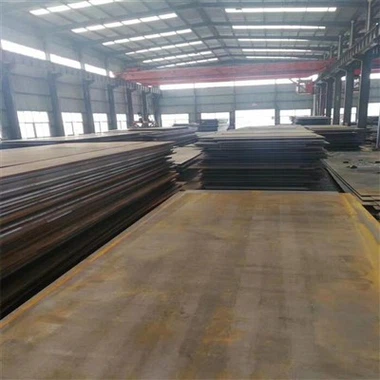
A387 Carbon Mild Steel Plate
Products Description The Enforcement Standards of A387 Carbon Mild Steel Plate The A387 Carbon Mild Steel Plate is a commonly utilized material in various industries, and its application is governed by a set of well-defined enforcement standards. These standards are crucial for ensuring the...
Description
Products Description
The Enforcement Standards of A387 Carbon Mild Steel Plate
The A387 Carbon Mild Steel Plate is a commonly utilized material in various industries, and its application is governed by a set of well-defined enforcement standards. These standards are crucial for ensuring the quality, performance, and safety of products made from this steel plate.
The chemical composition of the A387 Carbon Mild Steel Plate is strictly regulated. The content of elements such as carbon, manganese, silicon, phosphorus, and sulfur is precisely specified within narrow limits. This controlled composition is essential for imparting the desired mechanical and physical properties to the steel.
In terms of mechanical properties, the enforcement standards outline specific requirements for tensile strength, yield strength, elongation, and hardness. These parameters determine the plate's ability to withstand loads, deformations, and wear, and they vary depending on the grade and application of the steel.
The manufacturing process of the A387 Carbon Mild Steel Plate is also subject to detailed standards. This includes the methods of steelmaking, such as the type of furnace used, the refining processes, and the casting techniques. The subsequent hot and cold working operations, like rolling and forming, are also governed by precise guidelines to ensure consistent quality and dimensional accuracy.
Quality control is a key aspect of the enforcement standards. Regular inspections and tests are carried out at different stages of production. Non-destructive testing methods, such as ultrasonic testing and radiographic examination, are employed to detect internal flaws and discontinuities. Surface inspection is conducted to identify any cracks, pits, or other surface defects.


Dimensional accuracy is another critical factor. The thickness, width, and length of the steel plate must adhere to the specified tolerances to ensure proper fit and functionality in the final application.
The welding procedures for joining A387 Carbon Mild Steel Plates are also standardized. The type and grade of welding consumables, the welding parameters, and the pre- and post-weld heat treatments are all defined to guarantee the integrity and strength of the welded joints.
The enforcement standards also cover marking and documentation. Each plate is marked with relevant identification information, including the grade, heat number, and manufacturer's details. Comprehensive documentation is maintained throughout the production process, detailing the chemical composition, mechanical properties, test results, and any other relevant information.
| Chemical composition and Mechanical property | |||||||||
| Standard | Grade | C max | Mn max | Si max | P | S | Yield strength MIN | Tensile strength MIN | Elongation% |
| ASTMA572M | 50 | 0.23 | 1.60 | 0.50 | 0.04 | 0.05 | 345 | 380 | 21 |
| GB/T8162 | Q345B | 0.22 | 1.0-1.60 | 0.40 | 0.04 | 0.03 | 345 | 375 | 21-26 |
| ASTM A36 | A36 | 0.24 | - | 0.40 | 0.045 | 0.030 | 250 | 400-520 | 26 |
Hot Tags: a387 carbon mild steel plate, China a387 carbon mild steel plate suppliers, factory, SUS202, SUS201, 304L Stainless Steel, Inconel690, 2219aluminum, NastelloyB