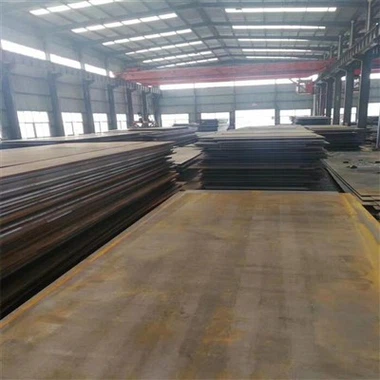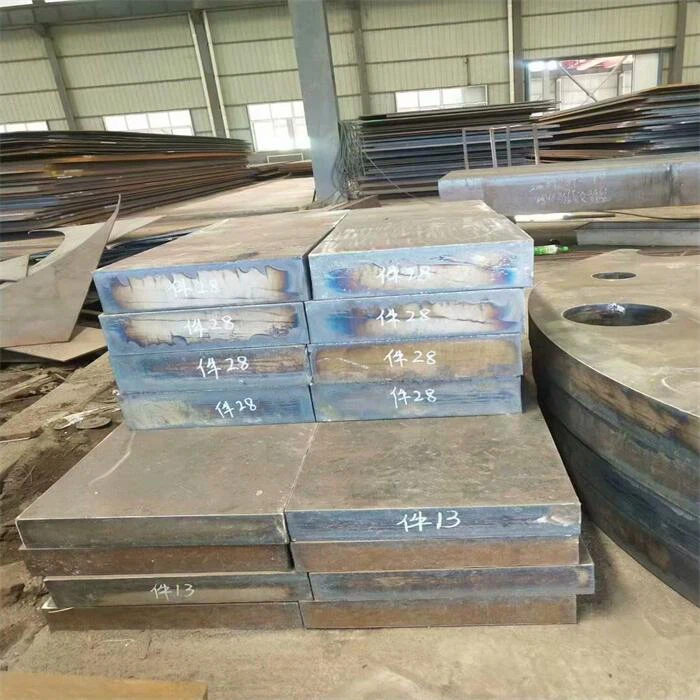
ABS Grade A Steel Plate
Products Description In the realm of industrial materials, the ABS Grade A Steel Plate holds significant importance, and understanding its execution standards and mechanical properties is crucial for various applications. The execution standards for ABS Grade A Steel Plate are meticulously...
Description
Products Description
In the realm of industrial materials, the ABS Grade A Steel Plate holds significant importance, and understanding its execution standards and mechanical properties is crucial for various applications.
The execution standards for ABS Grade A Steel Plate are meticulously defined to ensure consistent quality and performance. These standards encompass a wide range of aspects, including the composition of the steel, manufacturing processes, and quality control measures.
Regarding the composition, precise limits are set for the amounts of various elements such as carbon, manganese, silicon, phosphorus, and sulfur. These limits are established based on extensive research and practical experience to achieve the desired mechanical and physical properties of the steel.
The manufacturing processes are also strictly regulated. This includes the methods of melting, casting, rolling, and heat treatment. Each step is carefully controlled to ensure the homogeneity and integrity of the steel structure.
Quality control measures are an integral part of the execution standards. This involves rigorous testing and inspection at various stages of production. Non-destructive testing methods like ultrasonic testing and magnetic particle inspection are commonly employed to detect any internal or surface defects.


Now, let's delve into the mechanical properties of ABS Grade A Steel Plate. Tensile strength is a key parameter that indicates the plate's ability to resist stretching forces. It is typically measured under controlled conditions and provides valuable information for designing structures and components where the plate will be subjected to tensile loads.
Yield strength is another critical property. It marks the point at which the steel begins to deform plastically under load. A higher yield strength implies greater resistance to permanent deformation.
Elongation is a measure of the plate's ductility, representing its ability to stretch before fracture. This property is essential in applications where the material needs to absorb energy and deform without breaking.
Hardness is also an important mechanical characteristic. It reflects the plate's resistance to indentation and wear, which is particularly relevant in situations where the steel may be exposed to abrasive or frictional forces.
Impact strength measures the plate's ability to withstand sudden and severe loading conditions. It is crucial for applications where the material may encounter dynamic and shock loads.
In conclusion, a comprehensive understanding of the execution standards and mechanical properties of ABS Grade A Steel Plate is essential for engineers, designers, and manufacturers to make informed decisions and ensure the safe and efficient use of this material in a wide range of industrial applications.
Hot Tags: abs grade a steel plate, China abs grade a steel plate suppliers, factory, C276, S460J0R, S420N, GH3128, C6280, C38000