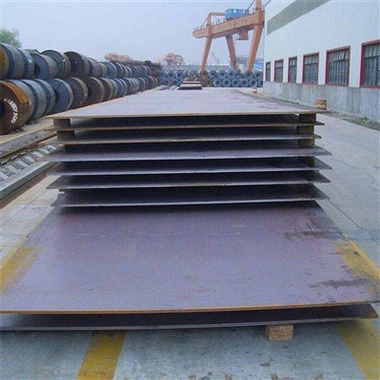
ABS High Quality Marine Shipbuilding Steel Plate
Products Description There are some differences in the production processes between high-strength shipbuilding steel and ordinary steel, mainly reflected in the following aspects: Raw material selection : High-strength shipbuilding steel : The requirements for raw materials are more stringent....
Description
Products Description
There are some differences in the production processes between high-strength shipbuilding steel and ordinary steel, mainly reflected in the following aspects:
Raw material selection:
High-strength shipbuilding steel: The requirements for raw materials are more stringent. It is necessary to select high-quality molten iron or scrap steel with low impurity content, uniform chemical composition and meeting specific standards. In order to achieve high strength and good toughness, some special alloy elements such as nickel, chromium, molybdenum, vanadium, etc. may be added. The addition amount and proportion of these alloy elements need to be precisely controlled to ensure the performance of the steel. For example, some high-strength shipbuilding steels will add an appropriate amount of nickel element to improve the toughness and corrosion resistance of the steel.
Ordinary steel: The selection of raw materials is relatively broader, mainly based on the specific use and performance requirements of the steel. For some ordinary steels with low performance requirements, scrap steel or molten iron with slightly higher impurity content may be used, but it needs to meet the basic national standards.
Smelting process:
High-strength shipbuilding steel: The smelting process requires more refined control. Advanced smelting technologies such as converter steelmaking and electric furnace steelmaking are usually adopted, and secondary refining outside the furnace may be carried out to further remove impurities and gases in the steel and improve the purity of the molten steel. For example, using secondary refining processes such as vacuum degassing and argon stirring can effectively reduce the gas content of hydrogen, oxygen, nitrogen, etc. in the steel and improve the quality of the steel.
Ordinary steel: The smelting process is relatively simple. Generally, traditional converter or electric furnace steelmaking processes are adopted, and the requirements for removing impurities and gases are relatively low.
Rolling process:
High-strength shipbuilding steel: In the rolling process, it is necessary to control appropriate parameters such as rolling temperature, rolling speed and reduction amount to obtain good microstructure and performance. Controlled rolling and controlled cooling technology is usually adopted, that is, controlling the heating temperature and cooling speed of the steel during the rolling process to refine the grains of the steel and improve its strength and toughness. For example, rough rolling is carried out at a relatively high temperature first, and then finish rolling is carried out at a relatively low temperature, and rapid cooling is adopted to make the performance of the steel reach the best.
Ordinary steel: The rolling process is relatively simple. Generally, conventional rolling temperatures and speeds are adopted, and the control requirements for the microstructure and performance of the steel are relatively low.
| Material | Q195, Q235, Q255, Q275, SS400, A36, SM400A, St37-2, SA283Gr, S235JR, S235J0, S235J2 |
| Thickness | 0.2-500mm, etc |
| Width | 600-4000mm, etc |
| Length | 2000mm, 2438mm, 3000mm, 3500, 6000mm, 12000mm, or as customer request |
| Standard | ASTM,AISI,JIS,GB, DIN,EN |
| Technique | Cold Rolled, Hot Rolled |


Heat treatment process:
High-strength shipbuilding steel: Heat treatment is one of the key links in the production of high-strength shipbuilding steel. Generally, heat treatment processes such as normalizing, tempering, and quenching are required to improve the microstructure and performance of the steel. For example, quenching can increase the strength and hardness of the steel, but the toughness will be reduced. Therefore, tempering treatment is needed to reduce the brittleness of the steel and improve its toughness.
Ordinary steel: According to different uses and performance requirements, some simple heat treatments such as annealing and normalizing may be carried out, but the process parameters and requirements for heat treatment are relatively low.
Why Choose Us?
We take pride in our ability to provide custom solutions for our customers' unique needs.
We analyze and compare the previous products and the current technical situation of our ABS High Quality Marine Shipbuilding Steel Plate, and develop new technical specifications and processes.
Our customers trust us to deliver high-quality Cold-rolled Steel products on time and on budget.
We strictly implement the warm and thoughtful after-sales service, adhere to the development of good professional ethics.
We offer a wide range of Cold-rolled Steel products to meet diverse customer needs.
We adhere to the customer-centric and brand-oriented business philosophy, and continue to provide customers with reliable and excellent products and services.
Our factory is committed to upholding the highest standards of safety and quality.
All staff of our company and all departments work together to combine business management, professional technology, quantitative statistical methods and ideological education.
Our Cold-rolled Steel products are known for their durability and reliability.
Relying on the superior conditions and strong advantages of mass production, we are able to meet the different needs of our customers.
Hot Tags: abs high quality marine shipbuilding steel plate, China abs high quality marine shipbuilding steel plate suppliers, factory, N10276, Bronze, Aluminum Bar, C68800, SUS630, 1 4833