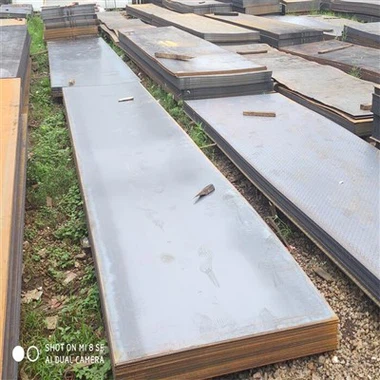
ABS High Quality Marine Shipbuilding Steel Plate, Ah32 Shipbuilding Plate
Products Description Material's Own Composition and Structural Factors Variation in Component Proportions : In Carbon - Silicon Composite Materials (CCS), the proportion of Coconut Shell Carbon (CSC) and Silica Particles (SP) has a significant impact on the stability of mechanical...
Description
Products Description
Material's Own Composition and Structural Factors
Variation in Component Proportions: In Carbon - Silicon Composite Materials (CCS), the proportion of Coconut Shell Carbon (CSC) and Silica Particles (SP) has a significant impact on the stability of mechanical properties. For example, an excessive amount of carbon component may lead to a material with more toughness but insufficient strength; conversely, an excessive amount of silicon component may make the material brittle. Moreover, even minor fluctuations in the proportion of these components during the production process can change the internal microstructure of the material, and then affect its mechanical performance under different working conditions.
Microstructural Non - uniformity: The uniformity of the distribution of carbon and silicon in the microstructure of CCS materials can affect the stability of its mechanical properties. If carbon or silicon agglomerates occur during the preparation process, there will be local performance differences inside the material. When an external force is applied, stress will concentrate in these non - uniform regions, and cracks are likely to be generated and propagate, reducing the strength and toughness of the material and making it difficult to maintain stable mechanical properties in different environments.
Effect of Porosity: The porosity of the material is also a crucial factor. A higher porosity may reduce the density and strength of the material, making it more vulnerable to external environmental factors. Pores in the material are like weak links. When the material is subjected to pressure or tension, the stress concentration around the pores will be more obvious, thus affecting the stability of the material's mechanical properties.
External Environmental Factors
Temperature Variation: Changes in temperature have a considerable impact on the stability of the mechanical properties of CCS materials. In a high - temperature environment, the atomic activities inside the material intensify, and the bond energy between molecules may change. For example, high temperature may cause the chemical bonds between carbon and silicon to break or relax, making the material softer and its strength reduced. In a low - temperature environment, the material may become brittle and its toughness decreased. These performance changes caused by temperature can lead to significant fluctuations in the mechanical properties of CCS materials under different temperature conditions.
Humidity Factor: The influence of humidity on the mechanical properties of CCS materials is mainly reflected in the hygroscopic and deliquescence processes of the material. When the material absorbs moisture, water molecules may penetrate into the internal structure of the material, destroying the binding force between carbon and silicon and resulting in a reduction in the strength and modulus of the material. Moreover, the expansion and contraction of the material caused by changes in humidity will also generate internal stress, further affecting the stability of the material's mechanical properties.
Long - term Dynamic Load: In construction application scenarios, CCS materials may bear long - term dynamic loads, such as wind - induced vibration, earthquakes of buildings, or vibrations of machinery and equipment. Long - term periodic loading and unloading will cause fatigue damage inside the material. This fatigue damage will gradually accumulate, leading to changes in the microstructure of the material, such as the generation of micro - cracks. As a result, the strength and toughness of the material will decline with the passage of time and the increase in the number of loadings, affecting the stability of its mechanical properties.
Processing Technology and Post - treatment Links
Parameters of Preparation Technology: In the synthesis process of CCS materials, the control of parameters such as mixing, compaction, and sintering is of vital importance. For example, uneven mixing will lead to uneven distribution of components and affect the material performance; insufficient compaction pressure may cause the material to have an overly high porosity; inappropriate sintering temperature and time may fail to form a good carbon - silicon binding phase. The unreasonableness of these preparation process parameters will reduce the stability of the material's mechanical properties.
Differences in Post - treatment Process: The treatment links after material preparation, such as surface treatment and heat treatment, will also affect the stability of its mechanical properties. Improper surface treatment may introduce defects on the material surface, which become stress - concentration points and reduce the material's strength. And inappropriate heat treatment may change the internal structure of the material, causing changes in the material's mechanical properties and making it unable to maintain stable performance during subsequent use.
Specification: as customers′ request
| Product | AH32 shipbuilding plate |
| Standard | ABS |
| Model Number | A,B,C,D,E |
| Length | 1000-12000mm |
| Technique | Hot Rolled |
| Usage | Ship building,construction,light industry,household appliance,automobile |
| Payment Terms | TT,L/C ect |
| Delivery Time | Average 30 Days |


Why Choose Us?
We take pride in our ability to provide custom solutions for our customers' unique needs.
We analyze and compare the previous products and the current technical situation of our ABS High Quality Marine Shipbuilding Steel Plate, Ah32 Shipbuilding Plate, and develop new technical specifications and processes.
Our customers trust us to deliver high-quality Cold-rolled Steel products on time and on budget.
We strictly implement the warm and thoughtful after-sales service, adhere to the development of good professional ethics.
We offer a wide range of Cold-rolled Steel products to meet diverse customer needs.
We adhere to the customer-centric and brand-oriented business philosophy, and continue to provide customers with reliable and excellent products and services.
Our factory is committed to upholding the highest standards of safety and quality.
All staff of our company and all departments work together to combine business management, professional technology, quantitative statistical methods and ideological education.
Our Cold-rolled Steel products are known for their durability and reliability.
Relying on the superior conditions and strong advantages of mass production, we are able to meet the different needs of our customers.
Hot Tags: abs high quality marine shipbuilding steel plate, ah32 shipbuilding plate, China abs high quality marine shipbuilding steel plate, ah32 shipbuilding plate suppliers, factory, 2017aluminum, SUS405, 347 Stainless Steel, F60 Stainless Steel, SUS420, 654SMo