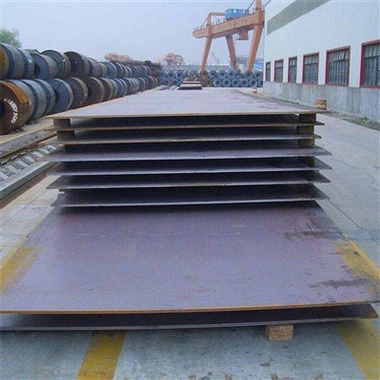
BV Dnv Nk Lr CCS ABS Grade A Shipbuilding Steel Plate
Products Description Raw Material Procurement Stage Select Reliable Suppliers : Give priority to steel suppliers with a good reputation and relevant quality certifications such as ISO 9001 Quality Management System Certification. These suppliers usually have relatively complete systems in raw...
Description
Products Description
Raw Material Procurement Stage
Select Reliable Suppliers: Give priority to steel suppliers with a good reputation and relevant quality certifications such as ISO 9001 Quality Management System Certification. These suppliers usually have relatively complete systems in raw material procurement, production process control, and quality inspection, and can provide high - strength steel plates with stable quality. For example, some well - known large - scale steel enterprises have a high reputation worldwide, and the steel plates they produce are more reliable in terms of quality.
Inspect Quality Certificates and Documents: Require suppliers to provide detailed quality certificates, including the chemical composition of the steel plates, mechanical property test reports, and classification society certification certificates (such as the certification of the steel plates by ABS, CCS, etc.). Carefully check these documents to ensure that all indicators of the steel plates meet the requirements of bulk carrier construction. For example, check whether the mechanical properties such as the yield strength, tensile strength, and elongation rate of AH32 steel plates are within the specified range, and whether the contents of chemical components such as carbon and manganese meet the standards.
Supervision of the Steel Plate Production Process
Resident Supervision at the Factory (if possible): For large - scale bulk carrier construction projects, if conditions permit, professional quality supervisors can be dispatched for resident supervision at the factory. Supervisors can directly observe the production process in the steel plate production workshop, including steel - making, rolling, and other processes. For example, during the steel - making process, ensure that the ingredients are prepared according to the specified chemical composition, and strictly control the addition amounts of elements such as carbon and manganese; during the rolling process, supervise the rolling process parameters such as rolling temperature and rolling speed to ensure that the structure and performance of the steel plate meet the requirements.
Regular Sampling Inspection: Even if resident supervision at the factory is not possible, the steel plates should be regularly sampled and inspected. Professional third - party inspection agencies can be entrusted to conduct inspections, and the inspection contents include the dimensional accuracy, surface quality, mechanical properties, and chemical composition of the steel plates. For example, according to a certain sampling ratio, samples are taken from each batch of steel plates for tensile tests to detect the yield strength and tensile strength; the grain size and structure of the steel plates are detected by metallographic analysis methods to ensure that they meet the requirements.
Inspection after the Arrival of Steel Plates
Appearance and Dimensional Inspection: After the steel plates arrive, first conduct an appearance inspection to check whether there are cracks, inclusions, delamination, and other defects on the surface. Use measuring tools (such as calipers and tape measures) to check the thickness, length, and width of the steel plates to ensure that the dimensional accuracy meets the design requirements of bulk carrier construction. For steel plates that do not meet the appearance and dimensional requirements, communicate with the supplier in a timely manner and take corresponding measures such as return or replacement.
Performance Re - testing: Re - test the key properties of the steel plates, mainly including mechanical properties and chemical composition. The tests can be carried out in the laboratory inside the shipyard or entrusted to an external qualified laboratory. For example, re - conduct tensile tests and impact toughness tests to verify whether the strength and toughness of the steel plates are consistent with the reports provided by the supplier; detect the chemical composition of the steel plates through chemical analysis methods, especially the contents of key elements such as carbon, phosphorus, and sulfur, to ensure that they are within the specified range.
Welding Process Test and Quality Control
Welding Procedure Qualification (PQR): Before using high - strength steel plates for bulk carrier construction, welding procedure qualification is required. According to factors such as the material and thickness of the steel plates, select appropriate welding methods (such as manual arc welding, gas - shielded welding, etc.), welding materials (welding rods, welding wires, etc.), and welding process parameters. Through welding procedure qualification tests, determine the optimal welding procedure to ensure that the mechanical properties of the welded steel plates meet the requirements. For example, when conducting welding procedure qualification for AH32 steel plates, observe the appearance quality of the weld, conduct non - destructive testing (such as ultrasonic testing, radiographic testing), and test the mechanical properties of the welded joints.


Quality Traceability and Record - keeping
Establish a Quality Traceability System: Establish detailed quality files for each high - strength steel plate used in bulk carrier construction, recording information from raw material procurement, production process, arrival inspection, welding use, and other links. Include the batch number of the steel plate, supplier information, quality inspection reports, welding process records, etc. In this way, once a quality problem is found during the construction process of the bulk carrier or after its use, the root cause of the problem can be quickly located through the quality traceability system, and effective solutions can be taken.
Keep Quality Records: Properly keep all records related to the quality of steel plates in accordance with relevant regulations and project requirements. These records are not only the basis for quality traceability but also the proof documents that the ship construction quality meets the standards. The retention period of records should comply with industry regulations and the requirements of relevant institutions such as classification societies.
Why Choose Us?
We take pride in our ability to provide custom solutions for our customers' unique needs.
We analyze and compare the previous products and the current technical situation of our BV Dnv Nk Lr CCS ABS Grade A Shipbuilding Steel Plate, and develop new technical specifications and processes.
Our customers trust us to deliver high-quality Cold-rolled Steel products on time and on budget.
We strictly implement the warm and thoughtful after-sales service, adhere to the development of good professional ethics.
We offer a wide range of Cold-rolled Steel products to meet diverse customer needs.
We adhere to the customer-centric and brand-oriented business philosophy, and continue to provide customers with reliable and excellent products and services.
Our factory is committed to upholding the highest standards of safety and quality.
All staff of our company and all departments work together to combine business management, professional technology, quantitative statistical methods and ideological education.
Our Cold-rolled Steel products are known for their durability and reliability.
Relying on the superior conditions and strong advantages of mass production, we are able to meet the different needs of our customers.
Hot Tags: bv dnv nk lr ccs abs grade a shipbuilding steel plate, China bv dnv nk lr ccs abs grade a shipbuilding steel plate suppliers, factory, S420NL, Cu19Ni4Fe4, CuZn36Pb1 5, S890QL, SUS303, CuBe2