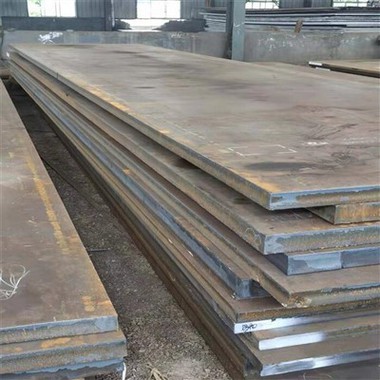
BV FH40 Steel Plate
Products Description Microstructural Differences Grain Size Variation : The grain size of a material significantly affects its properties. For example, in metallic materials, a smaller grain size generally enhances the material's strength and hardness. This is because the presence of grain...
Description
Products Description
Microstructural Differences
Grain Size Variation: The grain size of a material significantly affects its properties. For example, in metallic materials, a smaller grain size generally enhances the material's strength and hardness. This is because the presence of grain boundaries hinders the movement of dislocations, and smaller grains mean more grain boundaries. In terms of electromagnetic detection, changes in grain size will alter the material's electrical conductivity and magnetic permeability. Coarser grains may reduce the material's electrical conductivity, and during the detection process, the non - uniformity of the microstructure will lead to different scattering and attenuation of electromagnetic signals, thus interfering with crack detection.
Phase Composition Change: Materials will form different phase compositions after different processing techniques such as heat - treatment. Taking steel as an example, after quenching and tempering treatment, different phases such as martensite and tempered sorbite may appear in the steel. The uneven distribution of these phases will interfere with electromagnetic detection signals, making it difficult to accurately identify crack signals. Different phases have different electromagnetic characteristics, such as electrical conductivity and magnetic permeability. When their proportions or distributions change, the overall electromagnetic response of the material will also change, thereby affecting the accuracy of crack monitoring.
Crystal Defects: Defects inside crystals, such as vacancies, interstitial atoms, and dislocations, can also change the material's characteristics. Vacancies and interstitial atoms will affect the bonding between atoms, thus changing the material's electrical and magnetic properties. The existence of dislocations will affect the material's mechanical properties and also have an indirect impact on its electromagnetic properties. For example, in regions with a high dislocation density, there may be local stress concentration, which may change the material's magnetic domain structure and then affect the magnetic permeability, interfering with electromagnetic detection signals.
|
Equivalent steel grade of BV/FH40 |
|||||||
|
DNV |
GL |
LR |
BV |
CCS |
NK |
KR |
RINA |
|
NV F40 |
GL-F40 |
LR/FH40 |
BV/FH40 |
CCS/F40 |
K F40 |
R F40 |
RI/F40 |


Temperature Variation
Difference in Thermal Expansion Coefficient: Materials will expand or contract when the temperature changes. Different materials or the same material in different phase states have different thermal expansion coefficients. When the temperature changes, this difference may lead to the generation of thermal stress inside the material. For example, in composite materials, the different components have inconsistent thermal expansion coefficients, and stress will be generated at the interface when the temperature changes. This stress may change the material's microstructure and then affect its electromagnetic characteristics. For electromagnetic detection, the change in electromagnetic characteristics caused by temperature may be misinterpreted as a signal change caused by cracks.
Effect of Phase - Transition Temperature: Some materials will undergo a phase transition at a specific temperature. During the phase - transition process, the material's physical properties will change significantly, including electrical conductivity and magnetic permeability. For example, a ferromagnetic material will lose its magnetism at the Curie temperature, and its magnetic permeability will drop sharply. If a material undergoes a phase transition during the electromagnetic detection process, it will lead to a huge change in the detection signal, interfering with the normal monitoring of cracks. Moreover, new crystal structures or phases may be generated during the phase - transition process, and the electromagnetic characteristics of these new phases are different from those of the original phase, which will also increase the complexity of signal interpretation.
Why Choose Us?
We take pride in our ability to provide custom solutions for our customers' unique needs.
We analyze and compare the previous products and the current technical situation of our BV FH40 Steel Plate, and develop new technical specifications and processes.
Our customers trust us to deliver high-quality Cold-rolled Steel products on time and on budget.
We strictly implement the warm and thoughtful after-sales service, adhere to the development of good professional ethics.
We offer a wide range of Cold-rolled Steel products to meet diverse customer needs.
We adhere to the customer-centric and brand-oriented business philosophy, and continue to provide customers with reliable and excellent products and services.
Our factory is committed to upholding the highest standards of safety and quality.
All staff of our company and all departments work together to combine business management, professional technology, quantitative statistical methods and ideological education.
Our Cold-rolled Steel products are known for their durability and reliability.
Relying on the superior conditions and strong advantages of mass production, we are able to meet the different needs of our customers.
Hot Tags: bv fh40 steel plate, China bv fh40 steel plate suppliers, factory, 416 Stainless Steel, 253Ma, GH3044, C35000, CuZn20Al2As, CuSn4Zn3