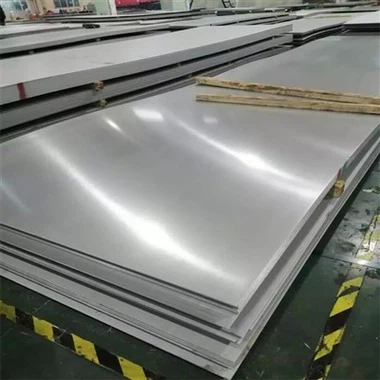
BV Marine Steel Plate Grade B
1 Products Description Differences between BV Marine Steel Plate Grade E, Grade D, and Grade B: Impact toughness test temperature and performance: Grade B: The impact test temperature is 0°C. This means that when the impact test is conducted at 0°C, the steel should be able to reach the...
Description
Products Description
Differences between BV Marine Steel Plate Grade E, Grade D, and Grade B:
Impact toughness test temperature and performance:
Grade B: The impact test temperature is 0°C. This means that when the impact test is conducted at 0°C, the steel should be able to reach the corresponding impact toughness index. Compared with Grade A steel (impact temperature is 20°C), its adaptability to low-temperature environments is improved.
Grade D: The impact test temperature is -20°C. When this grade of steel is subjected to an impact test in a low-temperature environment of minus 20°C, it can still maintain good toughness and is suitable for ships sailing in relatively cold climates or marine structures used in low-temperature environments.
Grade E: The impact test temperature is -40°C. It has the best low-temperature toughness among these three grades and can maintain good impact resistance in an extremely cold environment of minus 40°C. It is of great significance for marine engineering applications in extremely cold sea areas or those with extremely high requirements for low-temperature performance.
Slight differences in chemical composition: Although these three grades of steel all belong to general-strength shipbuilding steel, there may be some subtle differences in specific chemical compositions. For example, there may be different control ranges for the content of certain alloying elements, and these differences will affect the performance of the steel. However, in general, their main chemical compositions are iron, carbon, silicon, manganese, etc., and key indicators such as carbon content are kept within a certain range to ensure the weldability and strength of the steel.
Emphasis on application scenarios:
Grade B: Suitable for the construction of ordinary ships that do not have particularly high requirements for low-temperature performance, such as the hull structure and deck of small or medium-sized ships sailing in relatively warm sea areas, and some marine engineering auxiliary structures that do not have high requirements for the low-temperature performance of steel.
Grade D: Commonly used in shipbuilding in sea areas with relatively cold climates, such as the North Sea and the Baltic Sea. In marine engineering, it is also suitable for some structures that may be affected by lower temperatures, such as offshore platforms near polar regions.
|
Steel Grade |
C |
Si |
Mn |
P |
S |
Als |
|
A |
≤0.21 |
≤0.50 |
≥2.5c |
≤0.035 |
≤0.035 |
|
|
B |
≤0.21 |
≤0.35 |
0.8~1.2 |
≤0.035 |
≤0.035 |
|
|
D |
≤0.21 |
≤0.35 |
0.6~1.2 |
≤0.035 |
≤0.035 |
≥0.015 |
|
E |
≤0.18 |
≤0.35 |
0.7~1.2 |
≤0.035 |
≤0.035 |
≥0.015 |


Grade E: Mainly used in ships and marine engineering structures operating in extremely cold sea areas, such as ships in extremely cold areas such as the Arctic Ocean and deep-sea oil extraction platforms. These structures require steel to have excellent low-temperature toughness to ensure safety and reliability in harsh environments.
Shipbuilding steel grades certified by Bureau Veritas:
General-strength steel grades: Divided into four grades A, B, D, and E. The requirements for tensile strength, yield strength, and elongation are roughly the same, but the impact toughness test temperatures are different. From Grade A to Grade E, the requirements for low-temperature toughness gradually increase.
High-strength steel grades: Divided into two strength levels and three quality grades, specifically including AH32, DH32, EH32, AH36, DH36, EH36, etc. These high-strength steels have higher requirements in terms of strength and toughness and are suitable for ship and marine engineering structures with higher requirements for steel performance, such as large ocean-going freighters and high-end offshore platforms.
Why Choose Us?
We take pride in our ability to provide custom solutions for our customers' unique needs.
We analyze and compare the previous products and the current technical situation of our BV Marine Steel Plate Grade B, and develop new technical specifications and processes.
Our customers trust us to deliver high-quality Cold-rolled Steel products on time and on budget.
We strictly implement the warm and thoughtful after-sales service, adhere to the development of good professional ethics.
We offer a wide range of Cold-rolled Steel products to meet diverse customer needs.
We adhere to the customer-centric and brand-oriented business philosophy, and continue to provide customers with reliable and excellent products and services.
Our factory is committed to upholding the highest standards of safety and quality.
All staff of our company and all departments work together to combine business management, professional technology, quantitative statistical methods and ideological education.
Our Cold-rolled Steel products are known for their durability and reliability.
Relying on the superior conditions and strong advantages of mass production, we are able to meet the different needs of our customers.
Hot Tags: bv marine steel plate grade b, China bv marine steel plate grade b suppliers, factory, Inconel690, 500HB Steel, SUS403, 310S, C5111, 1 4539