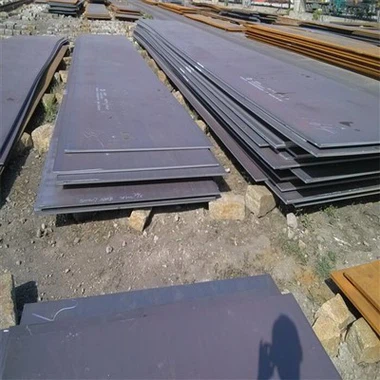
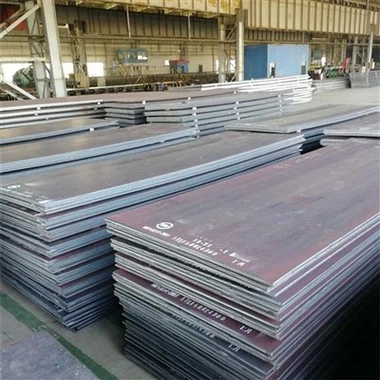
NK E70 Steel Plate
Products Description Purpose of Tempering In the manufacturing of high - carbon steel molds, tempering is mainly aimed at eliminating the internal stress generated during the quenching process. There is a large amount of residual stress inside the high - carbon steel mold after quenching, which...
Description
Products Description
Purpose of Tempering
In the manufacturing of high - carbon steel molds, tempering is mainly aimed at eliminating the internal stress generated during the quenching process. There is a large amount of residual stress inside the high - carbon steel mold after quenching, which is caused by the non - uniform microstructure transformation during the quenching cooling process. These internal stresses can lead to deformation or even cracking of the mold during subsequent processing or use. For example, for a high - precision injection mold, if there is a large amount of internal stress, after the mold cavity is machined, the cavity dimension may change due to stress release, thus affecting the precision of plastic products.
Tempering can also adjust the balance between the hardness and toughness of the mold. High - carbon steel has a relatively high hardness after quenching, but its toughness is relatively low. Through tempering, the hardness can be reduced to a certain extent and the toughness can be improved, enabling the mold to better adapt to different working conditions. For example, for some forging molds that need to bear impact loads, appropriately increasing the toughness after tempering can prevent the mold from brittle fracture under impact.
Selection of Tempering Temperature
Low - Temperature Tempering (150 - 250°C): This tempering method is mainly used to maintain the high hardness of high - carbon steel molds. In this temperature range, the microstructure change of the mold is relatively small, and the decomposition degree of martensite is low. Its main functions are to eliminate part of the quenching internal stress, improve the toughness of the mold to a certain extent, and maintain the relatively high hardness of the mold. It is suitable for cold - working molds, such as stamping molds. These molds need to have strong friction with workpieces during the working process. High hardness can ensure the wear resistance of the mold, and the appropriately improved toughness can reduce the risk of the mold edge chipping.
Medium - Temperature Tempering (350 - 500°C): When the tempering temperature is in this range, the martensite in high - carbon steel further decomposes, and carbides begin to aggregate and grow. At this time, the hardness of the mold will be reduced to some extent, and the toughness will be further improved. This tempering method is suitable for some molds that require a relatively balanced hardness and toughness, such as some cold - extrusion molds with complex shapes. During the cold - extrusion process, the mold needs to have a certain hardness to ensure dimensional accuracy and wear resistance, and also needs enough toughness to bear the extrusion force and prevent the mold from cracking.
High - Temperature Tempering (550 - 650°C): High - temperature tempering will significantly reduce the hardness of high - carbon steel molds and greatly improve the toughness. At this temperature, carbides will fully aggregate and spheroidize, and the microstructure of the mold will be more uniform and stable. This tempering method is often used for hot - working molds, such as die - casting molds and hot - forging molds. These molds need to bear high temperature and relatively large impact force during the working process. After high - temperature tempering, the molds can better resist thermal fatigue and impact fatigue and extend the service life of the molds.
|
Grade |
(wt%)Chemical Composition(wt%) |
|||||||||||
|
C |
Si |
Mi |
P |
S |
Cr |
Ni |
Mo |
Cu |
As |
Sb |
||
| NK E70 |
≤0.15 |
≤0.15 |
0.30-0.60 |
≤0.010 |
≤0.010 |
2.0-2.5 |
≤0.20 |
0.90-1.10 |
≤0.20 |
≤0.016 |
≤0.003 |
|


Why Choose Us?
We take pride in our ability to provide custom solutions for our customers' unique needs.
We analyze and compare the previous products and the current technical situation of our NK E70 Steel Plate, and develop new technical specifications and processes.
Our customers trust us to deliver high-quality Cold-rolled Steel products on time and on budget.
We strictly implement the warm and thoughtful after-sales service, adhere to the development of good professional ethics.
We offer a wide range of Cold-rolled Steel products to meet diverse customer needs.
We adhere to the customer-centric and brand-oriented business philosophy, and continue to provide customers with reliable and excellent products and services.
Our factory is committed to upholding the highest standards of safety and quality.
All staff of our company and all departments work together to combine business management, professional technology, quantitative statistical methods and ideological education.
Our Cold-rolled Steel products are known for their durability and reliability.
Relying on the superior conditions and strong advantages of mass production, we are able to meet the different needs of our customers.
Hot Tags: nk e70 steel plate, China nk e70 steel plate suppliers, factory, SUS303, C3712, HCT600C, CuSn4Zn3, 7050aluminum, 304L Stainless Steel