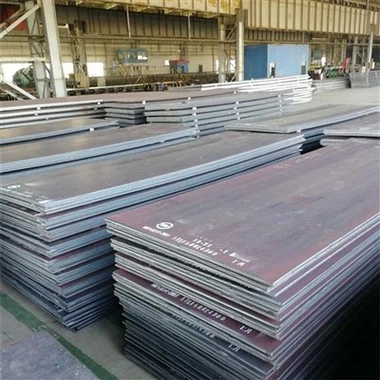
Shipbuilding Steel Plate DH36 EH36
Products Description Metallographic Inspection Method Principle : Metallographic inspection determines whether decarburization occurs by observing the microstructure of steel. Steel has specific metallographic structures in a normal state, such as pearlite and ferrite, and the distribution and...
Description
Products Description
Metallographic Inspection Method
Principle: Metallographic inspection determines whether decarburization occurs by observing the microstructure of steel. Steel has specific metallographic structures in a normal state, such as pearlite and ferrite, and the distribution and morphology of each phase follow a certain pattern. When decarburization takes place, the metallographic structure on the steel surface changes. Typically, the ferrite content increases, the pearlite decreases, and the ferrite grains may grow. For example, in high - carbon steel, the normal structure is a mixture of pearlite and cementite. After decarburization, the cementite in the surface layer decreases and the ferrite increases. Such structural changes can be observed through a metallographic microscope.
Operation Steps: Firstly, it is necessary to take samples of the steel, usually by cutting small specimens from the area suspected of decarburization. Then, the specimens are pre - treated through grinding, polishing, etc., to make their surfaces flat and smooth. Next, an appropriate etchant, such as a nitric - acid - alcohol solution, is used to etch the specimens to reveal the metallographic structure. Finally, the treated specimens are placed under a metallographic microscope for observation. By comparing with the metallographic atlas of normal steel, it is possible to determine whether decarburization has occurred and the depth of the decarburized layer.
Scope of Application: It is applicable to various types of steel, especially alloy steel and tool steel that are sensitive to structural changes. It can accurately observe the morphological changes of the decarburized layer's structure and is very helpful for studying the decarburization mechanism and evaluating the impact of decarburization on steel properties.
Hardness Testing Method
Principle: Since decarburization leads to a reduction in the surface hardness of steel, hardness testing can be used to indirectly determine whether the steel is decarburized. The principle of hardness testing is to measure hardness based on the size or depth of the indentation left by a indenter after applying a certain pressure on the steel surface. There are methods such as Rockwell hardness (HRC, HRB, etc.), Vickers hardness (HV), and Brinell hardness (HB). In the absence of decarburization, the surface hardness of the steel has a relatively stable value. When decarburization occurs, the surface hardness decreases.
Operation Steps: Firstly, an appropriate hardness testing method and equipment should be selected according to the type and size of the steel. For example, Rockwell hardness testing can be chosen for harder steel, and Vickers hardness testing may be more suitable for surface - hardened steel. Then, the steel surface is properly cleaned to ensure that the testing surface is flat and free of impurities such as oil. Next, the test is carried out according to the selected hardness testing standard, and multiple tests are conducted at different positions on the steel surface. The average value is taken to improve accuracy. Finally, the test results are compared with the standard hardness value of the steel in a normal state. If the hardness is significantly lower than the standard value, decarburization may have occurred.
Scope of Application: It is widely applicable to steel of various shapes and sizes. It is a relatively simple and quick method and can quickly and preliminarily determine whether the steel is decarburized. However, this method can only determine whether decarburization has occurred and cannot accurately determine the depth of the decarburized layer and the structural changes.
Dimensions:
Thickness: 3-200mm
Width:1500-4000mm
Length:5000-15000mm


Why Choose Us?
We take pride in our ability to provide custom solutions for our customers' unique needs.
We analyze and compare the previous products and the current technical situation of our Shipbuilding Steel Plate DH36 EH36, and develop new technical specifications and processes.
Our customers trust us to deliver high-quality Cold-rolled Steel products on time and on budget.
We strictly implement the warm and thoughtful after-sales service, adhere to the development of good professional ethics.
We offer a wide range of Cold-rolled Steel products to meet diverse customer needs.
We adhere to the customer-centric and brand-oriented business philosophy, and continue to provide customers with reliable and excellent products and services.
Our factory is committed to upholding the highest standards of safety and quality.
All staff of our company and all departments work together to combine business management, professional technology, quantitative statistical methods and ideological education.
Our Cold-rolled Steel products are known for their durability and reliability.
Relying on the superior conditions and strong advantages of mass production, we are able to meet the different needs of our customers.
Hot Tags: shipbuilding steel plate dh36 eh36, China shipbuilding steel plate dh36 eh36 suppliers, factory, 1 4521, S44003, 310S, CuSn5, 2017aluminum, S30300