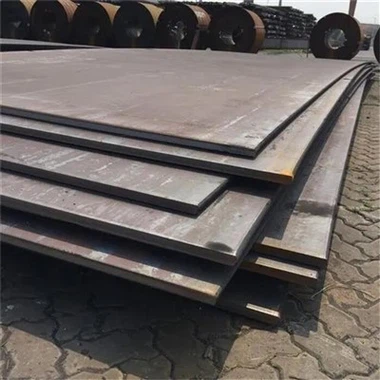
Steel Plate For ABS
Products Description The Concrete Approaches and Benefits of Quality Inspection for Steel Plate for ABS In the vast landscape of industrial utilization, especially within the challenging domains like marine and offshore engineering, the quality of Steel Plate for ABS assumes an unparalleled...
Description
Products Description
Grade and Chemical Composition (%)
|
Grade |
C%≤ |
Mn % |
Si % |
p % ≤ |
S % ≤ |
Al % |
Nb % |
V % |
|
A |
0.22 |
≥ 2.5C |
0.10~0.35 |
0.04 |
0.40 |
- |
- |
- |
|
B |
0.21 |
0.60~1.00 |
0.10~0.35 |
0.04 |
0.40 |
- |
- |
- |
|
D |
0.21 |
0.60~1.00 |
0.10~0.35 |
0.04 |
0.04 |
≥0.015 |
- |
- |
|
E |
0.18 |
0.70~1.20 |
0.10~0.35 |
0.04 |
0.04 |
≥0.015 |
- |
The Concrete Approaches and Benefits of Quality Inspection for Steel Plate for ABS
In the vast landscape of industrial utilization, especially within the challenging domains like marine and offshore engineering, the quality of Steel Plate for ABS assumes an unparalleled significance. To guarantee the dependability and functionality of these steel plates, an array of scrupulous quality inspection methodologies have been evolved and fine-tuned over the course of time.
Chemical composition assessment stands as one of the fundamental means of quality inspection for Steel Plate for ABS. It entails the exact determination of the diverse elements present within the steel. Advanced techniques such as atomic absorption spectrometry or inductively coupled plasma spectroscopy are brought into play. These techniques enable the precise quantification of elements like carbon, manganese, silicon, chromium, nickel, and others. By ensuring that the chemical composition aligns with the rigorous specifications stipulated by ABS standards, the mechanical and corrosion-resistant attributes of the steel can be projected and affirmed.


Non-destructive testing (NDT) techniques hold a crucial position in quality evaluation. Radiographic testing proves highly efficient in detecting internal flaws like voids, inclusions, and disbonds within the steel plate. The advantage of radiographic testing lies in its ability to furnish detailed information regarding the location and magnitude of these internal defects without causing any harm to the material. Eddy current inspection is utilized for the detection of surface and near-surface cracks. By inducing an electrical current in the steel and observing the flow patterns, any disruptions caused by cracks become evident.
A significant advantage of these quality inspection methods lies in their role in ensuring adherence to safety and regulatory norms. By adhering to stringent quality control protocols, the likelihood of failures and mishaps in critical applications is substantially reduced. This not only safeguards human lives but also protects valuable assets and the surrounding environment.
Furthermore, the data gleaned from these inspections offers invaluable feedback for the manufacturing process. If any persistent defects or deviations from the desired quality are identified, appropriate corrective actions can be initiated to optimize the production process, leading to enhanced product quality over the long term.
In summary, the comprehensive range of quality inspection approaches for Steel Plate for ABS presents numerous distinct advantages. It ensures the supply of high-quality steel plates that either meet or surpass the exacting demands of the industry. This, in consequence, contributes to the safety, reliability, and durability of structures and equipment where these steel plates are employed, rendering these inspection procedures an integral component of the manufacturing and supply chain workflow.
Hot Tags: steel plate for abs, China steel plate for abs suppliers, factory, Martensitic Stainless Steel, F60 Stainless Steel, S460QL, C68700, 39MnCrB5-2, SUS420J1