


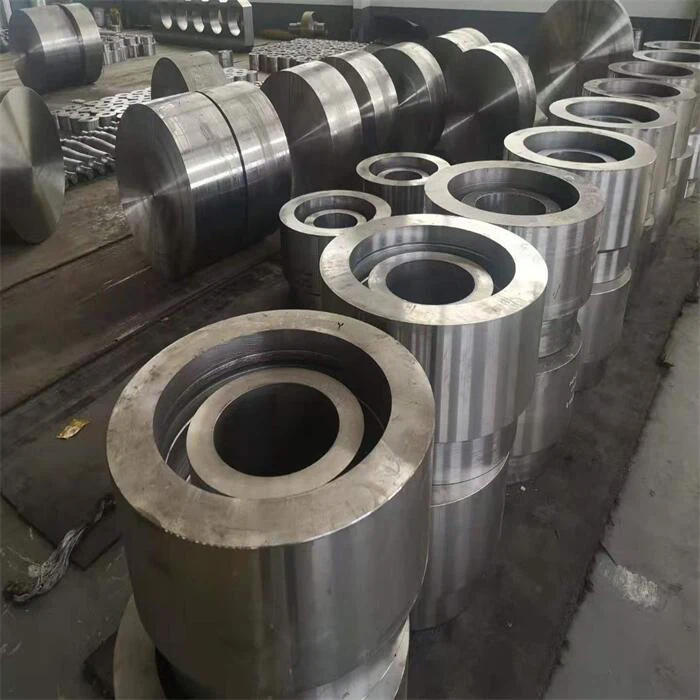
AISI 4135H Steel
Products Description AISI 4135H steel is a versatile alloy steel that can be subjected to various surface finishing processes to enhance its appearance, durability, and functionality. Here are some of the common surface processing techniques for AISI 4135H steel: Grinding and Polishing: Grinding...
Description
Products Description
AISI 4135H Steel Chemical Composition
| Element | Content (%) |
|---|---|
| Iron, Fe | 97.33 - 97.87 |
| Chromium, Cr | 0.80 - 1.10 |
| Manganese, Mn | 0.70 - 0.90 |
| Silicon, Si | 0.15 - 0.35 |
| Molybdenum, Mo | 0.15 - 0.25 |
| Carbon, C | 0.330 - 0.380 |
| Sulfur, S | ≤ 0.040 |
| Phosphorous, P | ≤ 0.035 |
Physical Properties
| Properties | Metric | Imperial |
|---|---|---|
| Density | 7.85 g/cm3 | 0.284 lb/in³ |
Mechanical Properties
| Properties | Metric | Imperial |
|---|---|---|
| Elastic modulus | 190-210 GPa | 27557-30458 ksi |
| Bulk modulus (typical for steel) | 140 GPa | 20300 ksi |
| Shear modulus (typical for steel) | 80 GPa | 11600 ksi |
| Poisson's ratio | 0.27-0.30 | 0.27-0.30 |
| Hardness, Brinell (annealed and cold drawn) | 187-229 | 187-229 |
| Hardness, Knoop (converted from Brinell hardness) | 230 | 230 |
| Hardness, Rockwell B (converted from Brinell hardness) | 94 | 94 |
| Hardness, Rockwell C (converted from Brinell hardness, value below normal HRC range, for comparison purposes only) | 15 | 15 |
| Hardness, Vickers (converted from Brinell hardness) | 218 | 218 |
| Machinability (based AISI 1212 steel, as on 100 machinability) | 70 | 70 |
Shot Blasting: Shot blasting involves propelling small steel shots or abrasive particles at high velocity onto the surface of the steel. This process cleans the surface, removes rust and scale, and creates a uniform texture. It also increases the surface hardness and improves adhesion for subsequent coatings.
Sandblasting: Similar to shot blasting, sandblasting uses abrasive particles such as sand to clean and roughen the surface. It can be used to prepare the steel for painting or other surface treatments. Sandblasting can also be used to create a decorative effect by varying the particle size and pressure.
Electroplating: Electroplating is a process in which a thin layer of metal is deposited on the surface of the steel through an electrochemical reaction. Common electroplated coatings for AISI 4135H steel include nickel, chromium, and zinc. These coatings provide corrosion resistance, improve wear resistance, and enhance the appearance of the steel.
Powder Coating: Powder coating involves applying a dry powder electrostatically to the steel surface and then curing it in an oven. This process creates a durable, uniform, and decorative finish. Powder coatings are available in a wide range of colors and finishes and offer excellent resistance to corrosion, abrasion, and fading.


Anodizing: Anodizing is a process mainly used for aluminum alloys but can also be applied to some steels. It creates a protective oxide layer on the surface, which can be colored or left clear. Anodized finishes provide corrosion resistance and a decorative appearance.
Chemical Conversion Coatings: Chemical conversion coatings, such as phosphate or chromate coatings, are applied to the steel surface to improve corrosion resistance and provide a base for subsequent coatings. These coatings form a chemical bond with the steel and enhance adhesion.
Painting: Painting is a common method to protect and decorate AISI 4135H steel. Different types of paints, such as enamel, epoxy, and polyurethane, can be used depending on the application requirements. Proper surface preparation, such as cleaning and priming, is essential for a good paint adhesion.
These are just some of the surface processing techniques available for AISI 4135H steel. The choice of process depends on the specific requirements of the application, such as appearance, durability, corrosion resistance, and cost.
Hot Tags: aisi 4135h steel, China aisi 4135h steel suppliers, factory, 7050aluminum, 310 Stainless Steel, SUS301, 1 4438, 20 Steel, HX160YD


