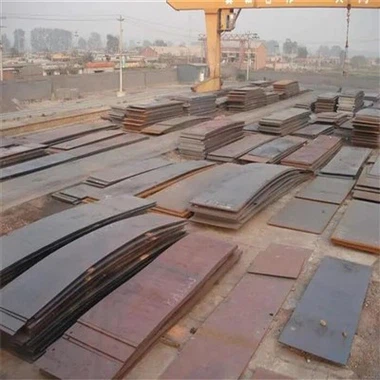
CCS Ship Steel Plate DH40
Products Description The Specific Operating Procedures for Destructive Testing during the Acceptance of CCS Ship Steel Plate DH40 In the process of accepting CCS Ship Steel Plate DH40, destructive testing is an important method to assess its quality and properties. This testing procedure is...
Description
Products Description
The Specific Operating Procedures for Destructive Testing during the Acceptance of CCS Ship Steel Plate DH40
In the process of accepting CCS Ship Steel Plate DH40, destructive testing is an important method to assess its quality and properties. This testing procedure is highly detailed and precise, and the following is an in-depth description of its specific operating processes and related data.
One of the common destructive testing methods is the tensile test. To conduct this test, a sample of the CCS Ship Steel Plate DH40 is cut and prepared in accordance with specified standards. The sample typically has a specific shape and dimensions, such as a cylindrical or flat specimen with a certain width and thickness.
The sample is then placed in a tensile testing machine. The machine gradually applies an increasing tensile force to the sample at a controlled rate. Data such as the applied force and the corresponding elongation of the sample are recorded continuously throughout the test.
For CCS Ship Steel Plate DH40, the yield strength is a critical parameter. This is the stress at which the material starts to undergo plastic deformation, and it is usually expected to be at least a certain value, say 390 MPa. The tensile strength, which is the maximum stress the material can withstand before fracture, should typically range from 510 MPa to 660 MPa. The elongation at fracture, indicating the material's ductility, is often required to be not less than a specific percentage, perhaps 20%.
|
Grade |
YieldStrength MPA |
TensileStrength MPA |
Elongation% |
TestTemperature°C |
V Ballistic Work |
||
|
Thickness mm |
|||||||
|
≤50 |
>50~70 |
>70~100 |
|||||
|
L |
T |
L |
T |
L |
T |
||
|
A |
≥235 |
400-520 |
≥22 |
20 |
34 |
||
|
B |
≥235 |
400-520 |
≥22 |
0 |
27 |
20 |
34 |
|
D |
≥235 |
400-520 |
≥22 |
-20 |
27 |
20 |
34 |
|
E |
≥235 |
400-520 |
≥22 |
-40 |
27 |
20 |
34 |
|
AH32 |
≥315 |
440-570 |
≥22 |
0 |
31 |
22 |
38 |
|
DH32 |
≥315 |
440-570 |
≥22 |
-20 |
31 |
22 |
38 |
|
EH32 |
≥315 |
440-570 |
≥22 |
-40 |
31 |
22 |
38 |
|
AH36 |
≥355 |
490-630 |
≥21 |
0 |
34 |
24 |
41 |
|
DH36 |
≥355 |
490-630 |
≥21 |
-20 |
34 |
24 |
41 |
|
EH36 |
≥355 |
490-630 |
≥21 |
-40 |
34 |
24 |
41 |
|
AH40 |
≥390 |
510-660 |
≥20 |
0 |
41 |
27 |
|
|
DH40 |
≥390 |
510-660 |
≥20 |
-20 |
41 |
27 |
|
|
EH40 |
≥390 |
510-660 |
≥20 |
-40 |
41 |
27 |
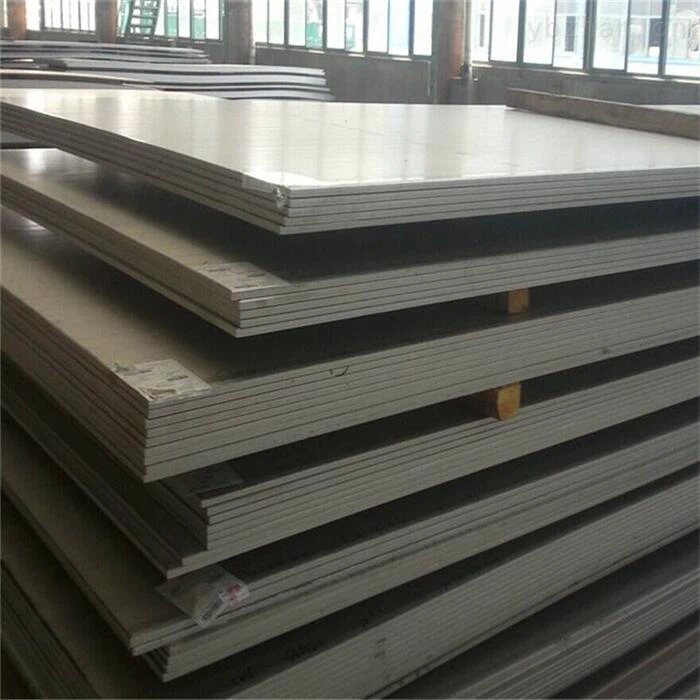

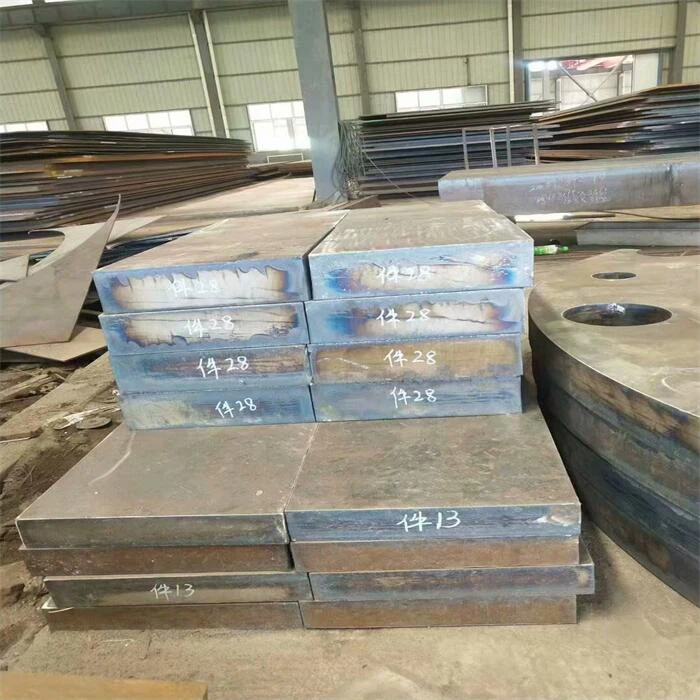
For CCS Ship Steel Plate DH40, the hardness values should fall within a certain range depending on the specific requirements and the intended application of the steel plate. For example, the Rockwell C hardness might be expected to be within 20 - 30 HRC.
Impact testing is also carried out to evaluate the material's toughness and resistance to sudden impact. Samples are prepared and subjected to a sudden impact load using an impact testing machine. The absorbed energy during the impact is measured.
For CCS Ship Steel Plate DH40, at a specified test temperature, such as -40°C, the average absorbed energy in the longitudinal direction might be required to be at least 47 J, and in the transverse direction, at least 31 J.
Chemical analysis is another aspect of destructive testing. A sample of the steel plate is taken and analyzed using techniques like spectroscopy or wet chemical analysis to determine the composition of elements such as carbon, manganese, silicon, phosphorus, and sulfur.
The carbon content should be controlled within a specific range, for instance, 0.18% - 0.20%. The manganese content might range from 1.00% to 1.60%, and the limits for phosphorus and sulfur are often very low, typically not exceeding 0.025% and 0.020% respectively.
Metallographic examination is yet another important destructive test. A sample is sectioned, polished, and etched to reveal the microstructure of the material. This helps to assess the grain size, distribution of phases, and any possible microdefects.
Why Choose Us?
We take pride in our ability to provide custom solutions for our customers' unique needs.
We analyze and compare the previous products and the current technical situation of our CCS Ship Steel Plate DH40, and develop new technical specifications and processes.
Our customers trust us to deliver high-quality Cold-rolled Steel products on time and on budget.
We strictly implement the warm and thoughtful after-sales service, adhere to the development of good professional ethics.
We offer a wide range of Cold-rolled Steel products to meet diverse customer needs.
We adhere to the customer-centric and brand-oriented business philosophy, and continue to provide customers with reliable and excellent products and services.
Our factory is committed to upholding the highest standards of safety and quality.
All staff of our company and all departments work together to combine business management, professional technology, quantitative statistical methods and ideological education.
Our Cold-rolled Steel products are known for their durability and reliability.
Relying on the superior conditions and strong advantages of mass production, we are able to meet the different needs of our customers.
Hot Tags: ccs ship steel plate dh40, China ccs ship steel plate dh40 suppliers, factory, 1080aluminum, 2507, S235J2C N, SK1 Steel, SUS316Ti, 20 Steel