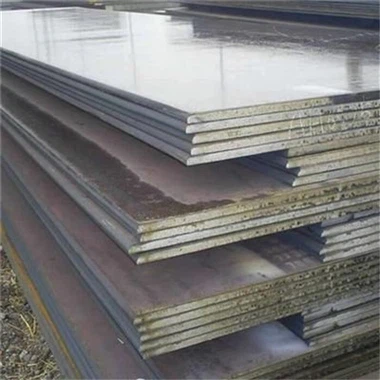
K A51 Steel Plate
Products Description Preparations before Testing Sample Preparation Cutting Dimensions : Firstly, appropriate-sized samples need to be cut from the KA51 steel plate for hardness testing. Generally, the size of the samples should be determined according to the requirements of the testing...
Description
Products Description
Preparations before Testing
Sample Preparation
Cutting Dimensions: Firstly, appropriate-sized samples need to be cut from the KA51 steel plate for hardness testing. Generally, the size of the samples should be determined according to the requirements of the testing equipment. For example, when using a Rockwell hardness tester, the thickness of the sample should be at least 10 times the depth of the indentation to avoid the back of the sample from bulging during the testing process, which could affect the test results. Usually, the samples can be cut into squares with side lengths of 50 - 100 mm or circles with diameters of 50 - 100 mm, and the thickness should be around 10 - 20 mm.
Surface Treatment: The surface of the samples requires fine treatment. The surface roughness should be controlled within a certain range because a rough surface will lead to inaccurate hardness test results. Generally, the surface roughness is reduced by grinding and polishing. Grinding can be done using sandpapers of different grits, starting from coarse sandpaper (such as 200 grit) and gradually changing to fine sandpaper (such as 1200 grit) until the surface is smooth and flat. Polishing can be carried out using polishing cloths and polishing agents to achieve a mirror-like surface, which can ensure good contact between the indenter and the sample surface and improve the testing accuracy.
Equipment Calibration
Calibration of Rockwell Hardness Tester: If the KA51 steel plate is to be tested using a Rockwell hardness tester, the hardness tester needs to be calibrated. Firstly, the integrity and dimensional accuracy of the indenter should be checked. For a diamond cone indenter, the cone angle should be 120°, and the radius of curvature at the tip should be 0.2 mm. The diameter of the steel ball indenter should comply with the standard specifications, such as 1/16 inch (approximately 1.5875 mm), etc. Meanwhile, the loads of the hardness tester should be calibrated, including the preliminary load (generally 10 kgf) and the main load (which has different values according to different scales), ensuring that the accuracy of the loads is within the specified range, for example, with an error not exceeding ±1%.
Calibration of Brinell Hardness Tester: Before using a Brinell hardness tester, the material and diameter of the indenter should be checked. The indenter is usually a cemented carbide ball or a quenched steel ball, and the diameter may be 10 mm, 5 mm, etc. Calibrate the test force by selecting an appropriate test force according to the testing requirements and the diameter of the indenter. For example, for a 10 mm indenter, the test force can be 29420 N (3000 kgf), etc. Also, check whether the setting of the holding time of the test force is accurate. Generally, the holding time is 10 - 15 seconds.
Calibration of Vickers Hardness Tester: The key point of calibrating a Vickers hardness tester lies in the shape and angle of the indenter. The indenter is a regular quadrangular pyramid diamond indenter, and the angle should be 136°, with high precision requirements. Meanwhile, calibrate the test force by selecting an appropriate test force according to the hardness of the material and the testing requirements. For example, for the relatively hard KA51 steel plate, a test force of 98.07 N (10 kgf) may be selected, and ensure the accuracy and stability of the test force.
|
KR/R A51 extra strength property |
||||||
|
Grade |
Mechanical Property |
Charpy V Impact Test |
||||
|
Yield |
Tensile |
Elongation |
Degree |
Energy 1 |
Energy 2 |
|
|
Min Mpa |
Mpa |
Min % |
0 |
50 |
33 |
|
|
KR/R A51 |
500 |
610-770 |
16 |
|||
|
Note: Energy 1 is longitudinal impact test, Energy 2 is transverse |
||||||


Analysis of Testing Results and Influencing Factors
Result Analysis
Analysis of Hardness Value Non-uniformity: If there are significant differences in the test results, it may be caused by the non-uniformity of the material itself. For example, during the production process of the steel plate, compositional segregation or microstructural non-uniformity may occur. At this time, more tests need to be carried out at different positions, and methods such as metallographic analysis can be combined to determine the differences in the internal microstructure of the material, thereby analyzing the reasons for the non-uniformity of the hardness.
Influencing Factors
Material Factors: The microstructure of the KA51 steel plate itself (such as grain size, phase composition, etc.) will affect the hardness test results. Fine grains and a larger number of hard phases (such as carbides) will increase the hardness. If there is compositional segregation in the material, it will lead to non-uniformity of the hardness. For example, an excessively high local carbon content will significantly increase the hardness of that area.
Testing Factors: The selection of testing methods (such as Rockwell, Brinell, Vickers hardness testing methods), the accuracy of the testing equipment (including the accuracy of the indenter, the accuracy of the loads, etc.), the preparation of the samples (surface roughness and flatness), and the testing environment (temperature and humidity) will all affect the test results. For example, a rough sample surface will cause the Rockwell hardness test results to be higher, and a too high testing environment temperature may reduce the hardness of the steel plate, affecting the accuracy of the test results.
Why Choose Us?
We take pride in our ability to provide custom solutions for our customers' unique needs.
We analyze and compare the previous products and the current technical situation of our K A51 Steel Plate, and develop new technical specifications and processes.
Our customers trust us to deliver high-quality Cold-rolled Steel products on time and on budget.
We strictly implement the warm and thoughtful after-sales service, adhere to the development of good professional ethics.
We offer a wide range of Cold-rolled Steel products to meet diverse customer needs.
We adhere to the customer-centric and brand-oriented business philosophy, and continue to provide customers with reliable and excellent products and services.
Our factory is committed to upholding the highest standards of safety and quality.
All staff of our company and all departments work together to combine business management, professional technology, quantitative statistical methods and ideological education.
Our Cold-rolled Steel products are known for their durability and reliability.
Relying on the superior conditions and strong advantages of mass production, we are able to meet the different needs of our customers.
Hot Tags: k a51 steel plate, China k a51 steel plate suppliers, factory, SUS440B, 316Ti, 500HB Steel, S44002, HX300BD, C1020