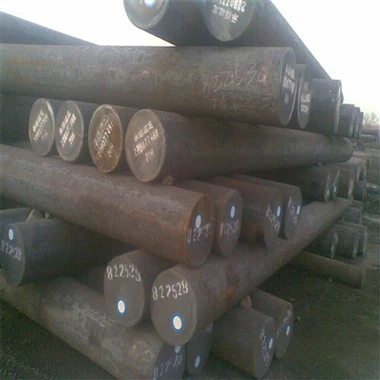
NK Gr.A Shipbuilding Steel Plate
Products Description NK (Nippon Kaiji Kyokai) Gr.A shipbuilding steel plate has the following characteristics and significance: Mechanical Properties Strength Yield Strength : NK Gr.A steel plate has a defined yield strength that enables it to bear the loads experienced by ships. This strength...
Description
Products Description
The following are some methods for selecting the appropriate ship plate thickness to meet the design requirements of the ship:
Considering from the aspect of ship structural strength
Hull stress analysis
Hydrostatic pressure: Calculate the pressure on the hull in still water according to the ship's draft depth and designed waterline. Generally, as the draft depth increases, the hydrostatic pressure increases, and the ship plate at the corresponding position needs to be thicker to withstand the pressure. For example, the bottom of the ship bears a large hydrostatic pressure and may require a thicker ship plate than the side of the ship.
Wave impact force: Consider the wave conditions in the ship's operating area and analyze the dynamic loads generated on the hull under the action of waves. In areas with frequent waves and large impact forces, such as the bow part, the thickness of the ship plate needs to be increased to resist the impact of the waves. Usually, finite element analysis or empirical formulas are used to evaluate the impact of wave impact force on the hull structure.
Specification we supply:
|
Thickness |
3-200mm |
|
Width |
1500-4000mm |
|
Length |
5000-15000mm |


Structural strength calculation
Calculation according to specifications: Conduct strength calculations according to ship design specifications (such as the Rules for Classification of Steel Sea - going Ships). These specifications provide detailed calculation formulas and parameters for determining the thickness of ship plates in different parts. For example, for the calculation of the bending strength of the hull girder, factors such as the total length, molded breadth, molded depth, and design load of the ship need to be considered to ensure that the hull structure meets the strength requirements under various working conditions.
Finite element simulation: Use finite element analysis software to model and simulate the hull structure. By simulating the stress distribution of the ship under different load conditions, the required thickness of the ship plate in each part can be accurately determined. For example, when designing a large ship, finite element analysis can help optimize the distribution of the ship plate thickness and reduce the weight of the hull while ensuring the strength.
Considering from the aspect of ship usage
Type of cargo
Bulk carrier: If it is a ship transporting high - density bulk cargo such as ores and coal, the cargo exerts a large pressure on the bottom of the ship, and the bottom ship plate needs to be thickened accordingly. For example, for a bulk carrier loaded with iron ore, the bottom of the ship may need to use a ship plate with a thickness of 25 - 30mm to prevent the bottom from deforming.
Container ship: Since the container cargo is relatively evenly distributed, the focus is on the strength of the deck and bulkheads. In order to support the weight and lashing force of multiple layers of containers, the thickness of the ship plate on the deck and bulkheads is usually between 14 - 20mm.
Special usage requirements
Refrigerated ship: This type of ship needs to maintain a specific low - temperature environment. The thickness of the ship plate not only needs to meet the structural strength requirements but also consider the thermal insulation performance. Usually, a sandwich structure is adopted, and the thickness of the inner and outer ship plates may be 8 - 12mm, with thermal insulation materials sandwiched in the middle.
Chemical tanker: For ships transporting dangerous chemicals, the ship plate not only needs to have sufficient strength but also needs to have good corrosion resistance. According to the type and corrosiveness of the chemicals being transported, a special material with an appropriate thickness of the ship plate may be selected. For example, for a chemical tanker transporting strong acids, the thickness of its ship plate may be 16 - 22mm, and a corrosion - resistant alloy material is used.
Why Choose Us?
We take pride in our ability to provide custom solutions for our customers' unique needs.
We analyze and compare the previous products and the current technical situation of our NK Gr.A Shipbuilding Steel Plate, and develop new technical specifications and processes.
Our customers trust us to deliver high-quality Cold-rolled Steel products on time and on budget.
We strictly implement the warm and thoughtful after-sales service, adhere to the development of good professional ethics.
We offer a wide range of Cold-rolled Steel products to meet diverse customer needs.
We adhere to the customer-centric and brand-oriented business philosophy, and continue to provide customers with reliable and excellent products and services.
Our factory is committed to upholding the highest standards of safety and quality.
All staff of our company and all departments work together to combine business management, professional technology, quantitative statistical methods and ideological education.
Our Cold-rolled Steel products are known for their durability and reliability.
Relying on the superior conditions and strong advantages of mass production, we are able to meet the different needs of our customers.
Hot Tags: nk gr.a shipbuilding steel plate, China nk gr.a shipbuilding steel plate suppliers, factory, Martensitic Stainless Steel, SUS420J1, CuAl10Fe3, CuZn38Pb2, S41600, N06690