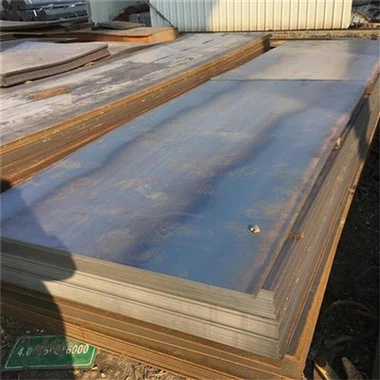
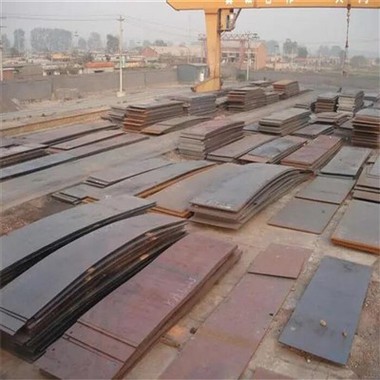
CCS F620 Steel Plate
Products Description Case One: CCS F620 Steel Components in Shipbuilding Research Background and Purpose : In shipbuilding, CCS F620 steel is used for key structural components. To improve the performance of these components, researchers conducted vibration stress-relief treatment on them and...
Description
Products Description
Case One: CCS F620 Steel Components in Shipbuilding
Research Background and Purpose: In shipbuilding, CCS F620 steel is used for key structural components. To improve the performance of these components, researchers conducted vibration stress-relief treatment on them and used the nano-indentation technique to evaluate the strengthening effect.
Experimental Procedure:
Sample Preparation: Two groups of CCS F620 steel samples were selected. One group served as the untreated control group, and the other group underwent vibration stress-relief treatment. The parameters for the vibration stress-relief treatment were a vibration frequency of 2000 Hz, a vibration acceleration of 30 m/s², and a treatment time of 2 hours.
Nano-indentation Testing: A nano-indentation tester was used, and a triangular pyramidal indenter was adopted to test the two groups of samples. Multiple test points (for example, 20 points) were selected on the surface of each sample. The loading force was gradually increased from 0.1 mN to 10 mN, and the load-displacement curve of each test point was recorded.
Data Analysis and Strengthening Effect Evaluation:
Comparison of Average Hardness: The hardness was calculated by the Oliver-Pharr method. The average hardness of the untreated samples was [X] GPa, and the average hardness of the treated samples was [Y] GPa. Since the hardness of the treated samples was significantly higher than that of the untreated samples, it indicated that the vibration stress-relief treatment had a strengthening effect on CCS F620 steel.
Analysis of Hardness Data Dispersion: The standard deviation of the hardness data was calculated. The standard deviation of the untreated samples was [A] GPa, and that of the treated samples was [B] GPa. The fact that the hardness data was more concentrated after treatment indicated that the vibration stress-relief treatment made the internal structure of the material more uniform, further verifying the strengthening effect.
Analysis of the Hardness-Depth Curve: By observing the hardness-depth curve, it was found that the hardness of the untreated samples dropped rapidly when the indentation depth reached [C] nm, while the rate of hardness decrease of the treated samples was significantly slower within the same depth range. At a depth of [D] nm, the hardness of the untreated samples dropped to [E] GPa, while the hardness of the treated samples still remained around [F] GPa. This showed that the vibration stress-relief treatment enabled the formation of structures inside the material that could resist deformation, and the strengthening effect was remarkable.
Case Two: CCS F620 Steel Pipeline Components in Offshore Engineering Equipment
Research Background and Purpose: Pipeline components in offshore engineering equipment need to withstand the complex marine environment and the pressure of internal media. Vibration stress-relief treatment was carried out on CCS F620 steel pipeline components in an attempt to improve their mechanical properties, and the strengthening effect was evaluated by the nano-indentation technique.
Experimental Procedure:
Sample Preparation: CCS F620 steel pipelines were cut into small samples. One group was left untreated, and the other group underwent vibration stress-relief treatment. The treatment parameters were a vibration frequency of 1500 Hz, a vibration acceleration of 25 m/s², and a treatment time of 3 hours.
Nano-indentation Testing: A spherical indenter was used for nano-indentation testing. The loading force range was from 0.05 mN to 5 mN. Fifteen test points were evenly selected on the surface of each sample. The load-displacement curves were recorded to obtain the hardness data.
|
Grade |
Thickness |
Yield Strength |
Tensile Strength |
Elongation |
Impact Energy |
|
(mm) |
MPa (min) |
MPa |
% (min) |
(KV J) (min) |
|
|
-60 degree |
|||||
|
CCS F620 |
8-260 |
620 |
720-890 |
15 |
41J |


Why Choose Us?
We take pride in our ability to provide custom solutions for our customers' unique needs.
We analyze and compare the previous products and the current technical situation of our CCS F620 Steel Plate, and develop new technical specifications and processes.
Our customers trust us to deliver high-quality Cold-rolled Steel products on time and on budget.
We strictly implement the warm and thoughtful after-sales service, adhere to the development of good professional ethics.
We offer a wide range of Cold-rolled Steel products to meet diverse customer needs.
We adhere to the customer-centric and brand-oriented business philosophy, and continue to provide customers with reliable and excellent products and services.
Our factory is committed to upholding the highest standards of safety and quality.
All staff of our company and all departments work together to combine business management, professional technology, quantitative statistical methods and ideological education.
Our Cold-rolled Steel products are known for their durability and reliability.
Relying on the superior conditions and strong advantages of mass production, we are able to meet the different needs of our customers.
Hot Tags: ccs f620 steel plate, China ccs f620 steel plate suppliers, factory, 400HB Steel, 1 4401, 654SMo, S235J0, 1 4028, GH3030