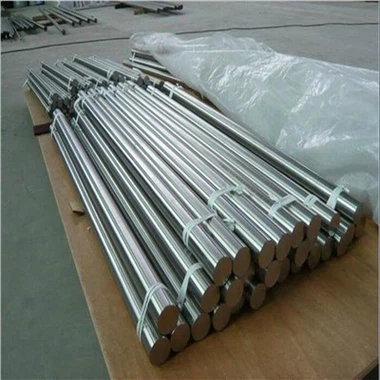
Alloy Steel Sheets & Plates
Products Description Alloy steel sheets and plates are versatile materials widely used in various industries due to their enhanced mechanical properties, such as high strength, toughness, wear resistance, and corrosion resistance, compared to carbon steel. They are alloyed with elements like...
Description
Products Description
Alloy steel sheets and plates are versatile materials widely used in various industries due to their enhanced mechanical properties, such as high strength, toughness, wear resistance, and corrosion resistance, compared to carbon steel. They are alloyed with elements like chromium, nickel, manganese, molybdenum, vanadium, and titanium to achieve specific performance characteristics. Below is a detailed overview of alloy steel sheets and plates, including their types, properties, applications, and key considerations in processing and selection:
Key Properties
The properties of alloy steel sheets and plates are tailored to their alloy composition:
Mechanical Strength: Higher tensile strength and yield strength than carbon steel, suitable for load-bearing structures.
Toughness: Good impact resistance, even at low temperatures (e.g., nickel-alloyed steels for cryogenic applications).
Heat Resistance: Maintains strength at elevated temperatures (critical for high-temperature industrial equipment).
Corrosion Resistance: Resists rust and chemical attack (stainless steels are a prime example).
Wear Resistance: Hardened surfaces withstand friction and abrasion (vital for mining and manufacturing machinery).


Processing Considerations
Processing alloy steel sheets and plates requires careful attention to their alloy composition to preserve performance:
Cutting:
Use high-speed steel (HSS) or carbide tools for machining, as alloy steels are harder than carbon steel.
Coolants (e.g., cutting oils with extreme pressure additives) are essential to reduce heat and tool wear.
Welding:
Select welding methods compatible with the alloy (e.g., TIG or MIG welding for stainless steels; low-hydrogen electrodes for high-strength low-alloy steels).
Preheating and post-weld heat treatment (e.g., stress relief annealing) may be required to prevent cracking, especially for high-chromium or high-molybdenum alloys.
Forming:
Cold forming is suitable for low-alloy steels, but high-alloy steels may require hot forming (at controlled temperatures) to avoid brittleness.
Ensure adequate equipment tonnage, as alloy steels have higher yield strength and require more force to shape.
Why Choose Us?
We take pride in our ability to provide custom solutions for our customers' unique needs.
We analyze and compare the previous products and the current technical situation of our Alloy Steel Sheets & Plates, and develop new technical specifications and processes.
Our customers trust us to deliver high-quality Cold-rolled Steel products on time and on budget.
We strictly implement the warm and thoughtful after-sales service, adhere to the development of good professional ethics.
We offer a wide range of Cold-rolled Steel products to meet diverse customer needs.
We adhere to the customer-centric and brand-oriented business philosophy, and continue to provide customers with reliable and excellent products and services.
Our factory is committed to upholding the highest standards of safety and quality.
All staff of our company and all departments work together to combine business management, professional technology, quantitative statistical methods and ideological education.
Our Cold-rolled Steel products are known for their durability and reliability.
Relying on the superior conditions and strong advantages of mass production, we are able to meet the different needs of our customers.
Hot Tags: alloy steel sheets & plates, China alloy steel sheets & plates suppliers, factory, 2 4817, 2 4851, GH2132, N08825, N1 0665, N10001