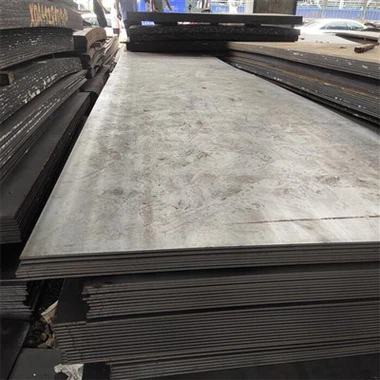
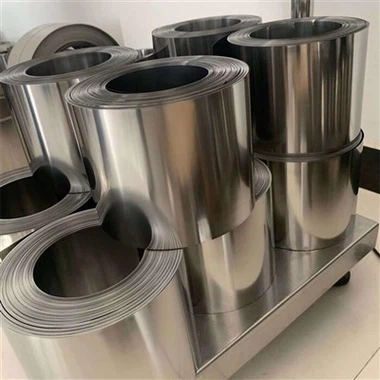
Hot Rolled And Cold Rolled Sheet Alloy Steel Plate For Roof Steel Plate
Products Description The manufacturing methods of hot-rolled sheets, cold-rolled sheets, and alloy steel plates have their own focuses but also share certain process correlations. The following is a detailed introduction: I. Manufacturing Method of Hot-Rolled Sheets (Including Hot-Rolled Alloy...
Description
Products Description


The manufacturing methods of hot-rolled sheets, cold-rolled sheets, and alloy steel plates have their own focuses but also share certain process correlations. The following is a detailed introduction:
I. Manufacturing Method of Hot-Rolled Sheets (Including Hot-Rolled Alloy Sheets)
Hot-rolled sheets are formed by rolling steel billets at high temperatures (thickness usually above 2.0 mm, with some reaching 0.35 mm). The hot-rolling process of alloy steel plates requires additional control of alloying elements.
Raw Material Preparation
Select continuous casting billets or initial rolling billets, with the composition determined according to the steel grade (ordinary hot-rolled steel is carbon steel, while alloy steel plates require the addition of alloying elements such as chromium, nickel, molybdenum, and manganese. For example, low-alloy high-strength steel needs to control the content of manganese and vanadium).
Inspect the steel billets to remove surface defects (such as cracks and scars) and ensure uniform composition.
Heating
Send the steel billets into a heating furnace and heat them to 1100–1250°C (austenitizing temperature range) to soften the billets for rolling while ensuring full solid solution of alloying elements in the matrix.
Rolling
Rough Rolling: Roll the heated steel billets through a reversing mill to initially reduce the thickness and adjust the plate shape, forming an intermediate billet (thickness about 10–30 mm).
Finish Rolling: The intermediate billet enters a continuous finishing mill train and is rolled through multiple passes at high temperatures (usually 800–1000°C) to gradually reach the target thickness (such as 1.5–12 mm). Simultaneously control the rolling speed and temperature to ensure uniform mechanical properties of the steel plate.
For alloy steel plates, precisely control the temperature and reduction during rolling to avoid cracks caused by increased rolling resistance due to alloying elements.
Why Choose Us?
We take pride in our ability to provide custom solutions for our customers' unique needs.
We analyze and compare the previous products and the current technical situation of our Hot Rolled and Cold Rolled Sheet Alloy Steel Plate for Roof Steel Plate, and develop new technical specifications and processes.
Our customers trust us to deliver high-quality Cold-rolled Steel products on time and on budget.
We strictly implement the warm and thoughtful after-sales service, adhere to the development of good professional ethics.
We offer a wide range of Cold-rolled Steel products to meet diverse customer needs.
We adhere to the customer-centric and brand-oriented business philosophy, and continue to provide customers with reliable and excellent products and services.
Our factory is committed to upholding the highest standards of safety and quality.
All staff of our company and all departments work together to combine business management, professional technology, quantitative statistical methods and ideological education.
Relying on the superior conditions and strong advantages of mass production, we are able to meet the different needs of our customers.
Hot Tags: hot rolled and cold rolled sheet alloy steel plate for roof steel plate, China hot rolled and cold rolled sheet alloy steel plate for roof steel plate suppliers, factory, 2 4817, GH2132, GH3039, Inconel690, Inconel825, N06600